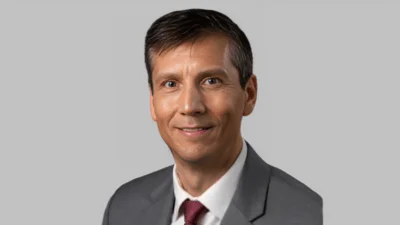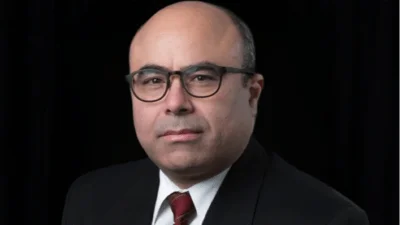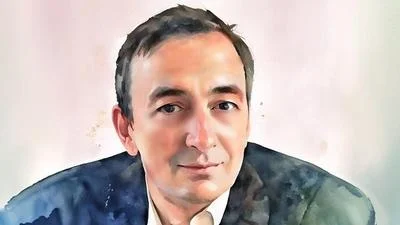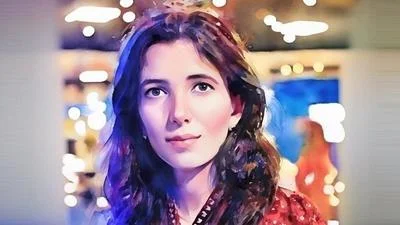
For Ukrainians, the fight for survival against Russia is also about values, economic freedom, and the country’s long-term future. Ukrainian advocates Velentyna Pavsyukova and Yana Matviichuk explain how humanitarian work, faith, and economic reform are central to the geopolitical battle facing their country.
Pavsyukova is the co-founder of the Research Institute of Saint Sophia and president of the humanitarian organization Chalice of Mercy. Matviichuk is co-founder and president of the Research Institute of Saint Sophia, which promotes Ukraine’s cultural and political identity while strengthening ties with Western partners. Both women have spent years advocating for Ukraine in the United States and abroad.
Pavsyukova says the institute’s mission is to explain Ukraine’s values to Western audiences, particularly in response to Russian propaganda. “It was to help people in the United States… understand that Ukraine is a country with conservative values,” she says, noting that family and faith play central roles in Ukrainian society. “Our country is people who do believe in God.”
The institute’s name reflects those spiritual roots. Matviichuk explains that Saint Sophia represents “holy wisdom” and symbolizes Kyiv’s Christian heritage, pointing to the historic Saint Sophia Cathedral as one of Europe’s oldest Christian landmarks. “For us, it’s a very important Christian symbol,” she says.
For Pavsyukova, humanitarian work has become a central part of Ukraine’s wartime effort. Through Chalice of Mercy, she has helped deliver medical supplies to Ukrainian hospitals, soldiers, and civilians throughout the war. The organization has shipped enormous quantities of aid from the United States to Ukraine.
“Over these years we shipped more than $200 million worth of medical supplies,” she says, explaining that much of the equipment would otherwise have gone unused in the United States. The aid is distributed free to hospitals and frontline units treating wounded soldiers and civilians.
Yet Pavsyukova stresses that Ukraine does not simply want to be viewed as a recipient of assistance. The war has also given Ukrainian forces hard-earned expertise that they believe could benefit allies. In particular, she points to Ukraine’s experience with drone warfare and battlefield medicine.
“We don’t want to be a country that just takes things,” she says. “We want to be able to give.” Ukrainian soldiers and doctors now possess knowledge gained from years of combat against Russian forces and Iranian-supplied drones.
Matviichuk approaches the challenge from a different angle: economic reform and national security. A longtime entrepreneur, she argues that Ukraine must shed lingering Soviet-era economic habits and embrace a freer market system.
“Ukraine has a very strong Soviet legacy that we are trying to leave behind,” she says. The solution, in her view, is to strengthen private enterprise and economic freedom. “Free economy… is about responsibility. It’s about freedom for each person, for family.”
Despite the devastation of war, Matviichuk notes that Ukraine’s economy continues functioning and that millions of citizens remain committed to rebuilding their country. Roughly 30 million people still live in Ukraine, many of them launching businesses and supporting the defense sector.
“If we give conditions for Ukrainian people who left the country to come back and make business in Ukraine,” she says, the country could improve both its economy and demographic outlook.
That economic recovery, she argues, will also strengthen Ukraine’s strategic partnership with the United States. Ukraine seeks investment and cooperation across sectors ranging from defense technology to commercial industry. “We can be a strategic partner,” Matviichuk says. “Ukraine is one of the best partners that could be for America because we share the same values.”
Matviichuk also warns that the stakes of the war extend far beyond Ukraine’s borders. In her view, Russia’s invasion reflects a broader contest between democratic societies and authoritarian regimes.
“This is not just the Ukrainian situation with Russia,” she says. “It’s a moment in history when democratic countries are fighting with authoritarian regimes.”
That global dimension is evident in the growing ties between Russia and Iran. Ukrainian cities have been targeted by tens of thousands of Iranian-designed drones used by Russian forces.
“Since 2022… over 50,000 Iranian-type drones were launched at our cities,” Matviichuk says. Those strikes have given Ukraine firsthand experience defending against the technology now appearing in other conflicts.
Both women argue that Ukraine’s future depends on defending critical principles against authoritarian aggression.
“This is about people’s lives,” Matviichuk says.