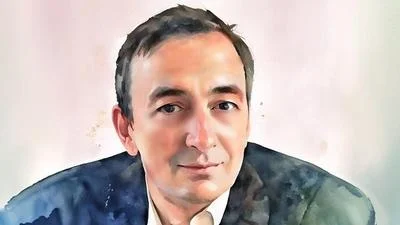
Global tensions are rising as conflicts in Ukraine and the Middle East reshape alliances and test Western unity. Questions about NATO cohesion, Russian resilience, and political shifts in Europe are driving debate across capitals.
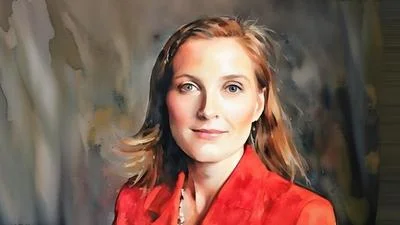
Charlie Hancock, opinion editor at the Moscow Times, says the real story lies in the long-term pressures building beneath the surface.
Hancock covers European security and the war in Ukraine. Her reporting has taken her to NATO meetings, military exercises, and the Munich Security Conference. She currently reports from Amsterdam after her publication relocated following Russia’s invasion of Ukraine.
Hancock says recent political developments in Europe highlight how closely Moscow tracks its influence abroad. Hungary’s political shift matters because “Hungary had veto power within both the European Union and NATO,” and Viktor Orbán “was very quick to apply pressure on Europe, particularly with regards to putting sanctions on Russia.”
She adds that the loss of such leverage could affect the Kremlin’s position, though change may be gradual. “We need to see what Magyar actually does in office,” she says, noting that his platform includes repairing relations with Western institutions rather than taking a firmly pro-Ukraine stance.
Russia’s broader strategy, according to Hancock, focuses on exploiting divisions rather than creating them. “It’s much easier and much more effective to cleave and widen divisions within societies or international alliances that already exist,” she says.
Uncertainty in U.S. policy adds to that advantage. “That unpredictability is very hard for Ukraine to plan,” she says, though she cautions it is not decisive. Structural weaknesses still weigh on Russia. “There are really deep structural problems within Russia’s economy, political system and armed forces.”
Hancock connects those pressures to the Kremlin’s economic outlook. Despite headlines about rising oil revenues, she says the reality is more fragile. “Russia has already blown through its entire budget deficit allocation for 2026,” she says. The situation reflects “an accumulation of stress fractures over time,” rather than imminent collapse. She adds, “I don’t think it’s going to collapse tomorrow,” but the long-term trajectory is concerning.
Her experience with the Moscow Times illustrates the risks of independent journalism under authoritarian pressure. The outlet left Russia after new laws restricted reporting on the war. “We would not have been able to say it how it is,” she says. Remaining in Moscow would have forced the publication to adopt official language and risk prosecution. “If we stayed… we’d have been a part of the propaganda machine by proxy,” she says.
According to Hancock, censorship does not require mass arrests to be effective. “You only need to have a couple of arrests for people to self-censor,” she says. The outlet now operates from Europe and continues reaching Russian audiences despite legal restrictions. “It’s actually illegal to share a link to one of our articles in Russia now,” she says, though alternative channels still allow information to circulate.
Tensions between Russia and the United Kingdom show how conflict extends beyond the battlefield. “Britain is a special enemy in the eyes of Russia,” she says, pointing to longstanding suspicions and intelligence rivalries. She adds that conflict should not be viewed as a binary state. “It’s much better to think of it as a long continuum of tension, of hostile interaction.”
Public awareness of that tension varies. Incidents such as threats to undersea infrastructure receive limited attention despite their significance. “Far fewer people actually read the stories that you think are important,” she says. Still, support for Ukraine remains strong in the United Kingdom. “The vast majority of people believe we should continue supporting Ukraine,” she says.
Hancock also points to evolving military lessons from the war. “The battlefield situation in Ukraine is so different to what a lot of Western soldiers have experienced,” she says, noting that NATO is learning from Ukrainian tactics. Air power has also shifted. Russian aircraft operate “far beyond the front line as almost a form of long-range artillery,” reflecting constraints imposed by air defenses.
Her overall assessment emphasizes patience and perspective. Russia’s position is neither collapsing nor stable. “What we’re seeing is an accumulation of stress fractures over time,” she says. Those pressures, combined with shifting alliances and internal challenges, will shape the next phase of the conflict.