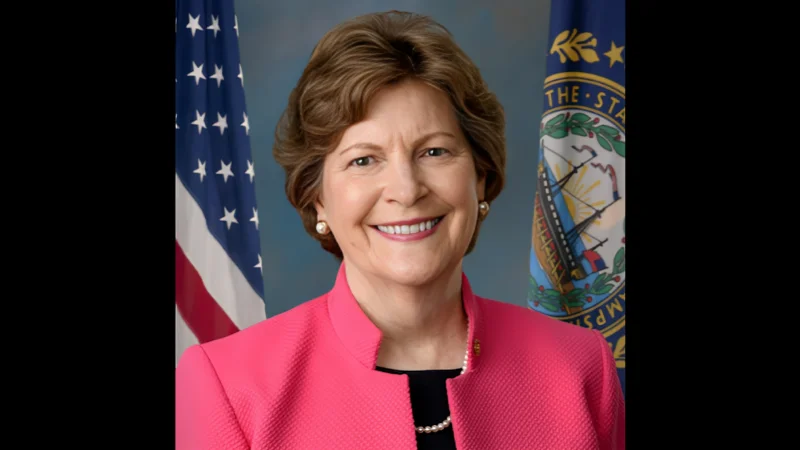
U.S. Senator Jeanne Shaheen, Ranking Member of the Senate Foreign Relations Committee, released a statement on Apr. 2 in response to President Trump’s address regarding the ongoing conflict with Iran.
Shaheen said that the goals of the war have shifted and its strategy remains unclear, adding that it has worsened economic challenges for Americans. She stated, “From the start, the goals of this war have changed, the strategy remains unclear and it has only exacerbated the cost-of-living crisis for everyday Americans. President Trump owes the American people an explanation as to why we are fighting this war. We did not get that tonight.”
She further said that U.S. security and prosperity have not improved as a result of the conflict: “It is increasingly clear that this reckless war has not made us stronger and the ever-changing goals have not been met. Instead, 13 U.S. service members are dead. Tens of thousands more are in harm’s way. Thousands of civilians across the region have been killed or injured. U.S. embassies, military bases and businesses have been attacked, critical infrastructure across the region has been destroyed and the Strait of Hormuz is closed. We are, sadly, not safer nor more prosperous as a country for having waged this war.”
Shaheen called on administration officials to provide more information to Congress: “Administration officials, including Secretary Rubio, must come before Congress and answer the questions that went unanswered tonight.”
The Senate Foreign Relations Committee plays a key role in shaping United States foreign policy by examining treaties and legislation according to its official website. The committee designates its Chairman to lead majority members while its Ranking Member heads minority members as detailed on its official website.
Since its establishment in 1816 as one of the original standing committees according to its official website, it has influenced significant foreign policy decisions such as supporting measures like the Truman Doctrine in 1947 and Marshall Plan in 1948 per its official website, as well as rejecting major treaties like Versailles in 1919-1920 as noted on its official site.
As debate continues over U.S involvement abroad, observers will be watching closely how Congress responds to calls for greater transparency about military actions.