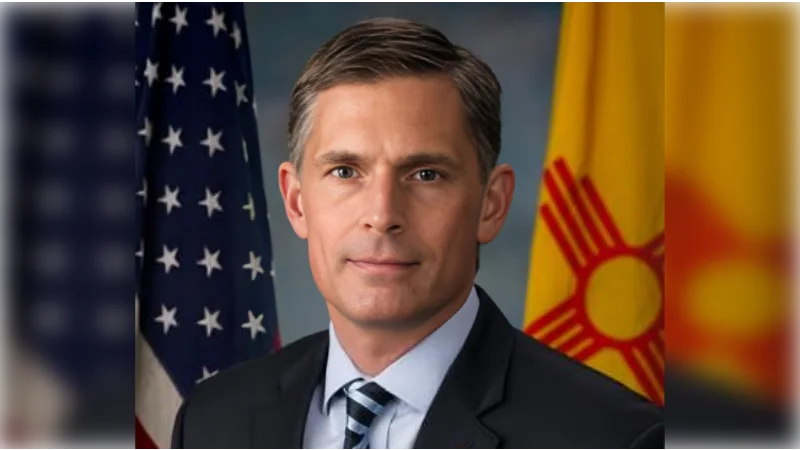
U.S. Senator Martin Heinrich, Ranking Member of the Senate Energy and Natural Resources Committee, objected on April 14 to legislation that he said would erase the history of the farm labor movement and silence survivors of abuse by Cesar Chavez.
Heinrich's remarks come as debate continues over how to address allegations of sexual assault and abuse by Chavez, while also preserving the broader legacy of those who fought for farmworkers’ rights. The senator applauded women including Dolores Huerta, Ana Murguia, and Debra Rojas for coming forward with their stories.
In his speech on the Senate floor, Heinrich said: “Many, like Dolores Huerta, feared that speaking up would enable those who have always opposed the farmworkers movement to erase it, along with Cesar Chavez. I stand here today to ensure that is never the case. The movement Dolores Huerta and so many others fought for was always bigger than only one man.”
Heinrich proposed amending Senator John Cornyn’s request by temporarily closing the Cesar Chavez National Monument instead of abolishing it outright. He called for a special resource study led by the National Park Service in consultation with all members of the farm labor movement—including survivors—to determine how best to honor their full history.
The senator also referenced concerns from six organizations—including Latinos in Heritage Conservation and Hispanic Access Foundation—who said Cornyn’s bill was drafted without consulting surviving activists or stakeholders from communities involved in establishing the monument. Heinrich warned that removing or abolishing this national park unit would erase an important part of Latino and Asian American history tied to farmworker activism.
“The sexual assault and abuse that Ana Murguia, Debra Rojas, and Dolores Huerta have described is horrific. And it necessarily and profoundly changes Cesar Chavez’ legacy,” Heinrich said during his remarks. He added: “Let me be clear: I agree…that we should no longer have a national monument dedicated to Ceasar Chavez’s legacy. But we absolutely should NOT erase this monument’s telling of the story of the farm labor movement.”
Heinrich has previously spoken against efforts he sees as erasing American history from public lands. He emphasized that future decisions about monuments should include input from survivors as well as other Americans involved in advancing fair wages and dignity for agricultural workers.