U.S. Department of Commerce
U.S. Government: Agencies/Departments/Divisions | Cabinet-Level Federal Department
Recent News About U.S. Department of Commerce
-

The United States - European Union Trade and Technology Council Talent for Growth Task Force has completed its work. Although the Task Force's activities, announced in December 2022, have come to an end, collaboration from the private sector continues.
-

In 2023, U.S. consumers expended $147 billion on pet products and services, as reported by the American Pet Products Association (APPA). The association also predicts steady year-over-year growth through 2030, with anticipated expenditures reaching a staggering $250 billion.
-

David Kappos is a partner at Cravath, Swaine and Moore. He is also the former undersecretary for intellectual property at the US Department of Commerce and former head of the US Patent and Trademark Office.
-

The Mortgage Bankers Association's (MBA) Purchase Applications Payment Index (PAPI) data for February indicates a rise in the monthly cost of home ownership. The national median payment applied for by purchase applicants escalated from $2,134 in January to $2,184 in February.
-

The Economic Advisory Committee of the American Bankers Association (ABA) this week released a forecast indicating a decreased risk of recession, with inflation expected to moderate and employment gains to remain strong. The committee also predicts a transition to a soft easing cycle by the Federal Reserve, commencing around mid-year.
-

Last week, hundreds of travel delegates from across the United States gathered on Capitol Hill for the U.S. Travel Association’s (USTA) legislative fly-in, Destination Capitol Hill. Armed with data and a set of requests, they sought to engage lawmakers in their cause.
-

President Biden's proposed budget for the 2025 fiscal year aims to bolster American innovation and competitiveness, with a particular focus on the U.S. Department of Commerce. The budget outlines $4 billion in mandatory funding and $11.4 billion in discretionary funding, earmarked to support the essential priorities of the Commerce Department.
-

The U.S. Department of Commerce has granted Intel a sum of $8.5 billion through the Investing in America Agenda for initiating projects in Arizona, New Mexico, Ohio, and Oregon. This investment, facilitated under the Creating Helpful Incentives to Produce Semiconductors (CHIPS) and Science Act, aims to fortify the supply chain of the U.S. Semiconductor Industry as the nation seeks to broaden its domestic market.
-

David Williams, president of the Taxpayers Protection Alliance (TPA) said it is “absolutely ridiculous” that “Congress has no oversight” of the Consumer Financial Protection Bureau (CFPB).
-

The Plastics Industry Association (PLASTICS) has unveiled the tenth video in its "Recycling is Real" campaign. The campaign aims to promote and raise awareness about plastic recycling in the United States.
-

The president and CEO of the American Financial Services Association (AFSA) today asked the Consumer Financial Protection Bureau (CFPB) to use “the well-accepted administrative rulemaking process” instead of what he said are “one-off and nontransparent enforcement proceedings.”
-

The U.S. Department of Commerce has declared that the Creating Helpful Incentives to Produce Semiconductors (CHIPS) for America Act is allocating funds to provide opportunities for companies to expand U.S. Semiconductor Packaging. The fresh funding aims to solicit applications for research and development that will aid in expediting the domestic capacity for advanced packaging substrates, a critical technology for manufacturing semiconductors.
-

The Intermodal Motor Carriers Conference (IMCC) of the American Trucking Association (ATA) has expressed approval for a new rule by the Federal Maritime Commission (FMC). This rule provides clarification on how shippers are billed for detention and demurrage charges. Both the IMCC and ATA had previously urged Congress to provide this clarification during the passage of the Ocean Shipping Reform Act in 2022.
-

The American Gaming Association (AGA) has reported that commercial gaming revenue in the United States reached a total of $66.5 billion in 2023. This figure represents a 10% increase from the $60.5 million generated in 2022, marking the third consecutive year of record revenue.
-

The United States Department of Commerce has announced a preliminary agreement with Global Foundries, aiming to bolster the domestic microchip supply. The agreement includes $1.5 billion in potential funding to support projects in New York and Vermont, expected to create approximately 10,500 jobs.
-

The United States Department of Commerce has published an update to its 2023 Equity Action Plan, outlining new commitments aimed at promoting equity. The Equity Action Plan forms part of the Department's initiatives to ensure equal opportunities for all Americans.
-

A recent report by the Consumer Financial Protection Bureau (CFPB) reveals that large banks have been imposing significantly higher interest rates compared to smaller banks and credit unions. This discrepancy in rates is causing the average borrower to lose substantial purchasing power.
-

A group of national trade associations has appealed to the White House, seeking improvements in the execution of the "made in America" stipulations for construction materials and products. The coalition expressed difficulties in navigating what they termed as the "opaque and unbalanced implementation" by the White House Office of Management and Budget (OMB).
-
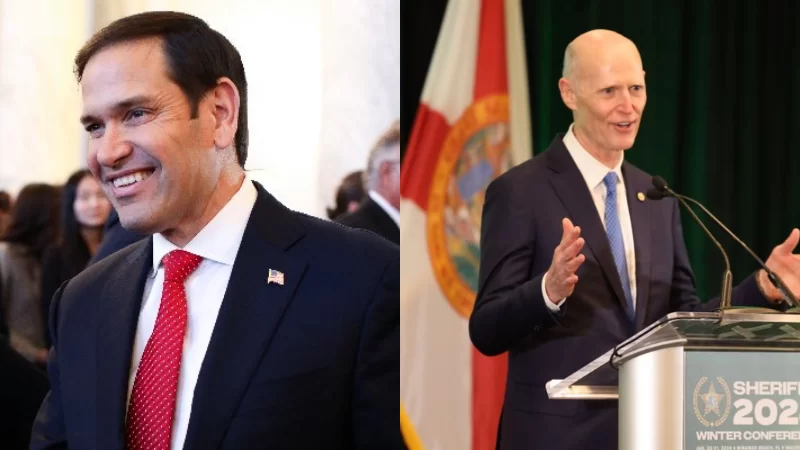
U.S. Senators Marco Rubio (R-Fla.) and Rick Scott (R-Fla.) have penned letters to the chief judges of Florida's three federal districts, emphasizing the threats to the U.S. judicial system presented by foreign third-party litigation funding (TPLF). The senators expressed that the federal judiciary requires increased transparency around foreign TPLF to avert "hostile foreign actors" from influencing litigation.
-

The National Restaurant Association and the Restaurant Law Center have petitioned the Federal Trade Commission (FTC) to exempt restaurants from its proposed regulation on deceptive fees. In their joint comments submitted on the proposal, these organizations argue that a blanket ban on concealed and misleading fees would be "unwarranted, unlawful, and would create significant unintended consequences for consumers."