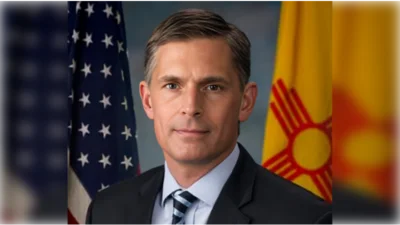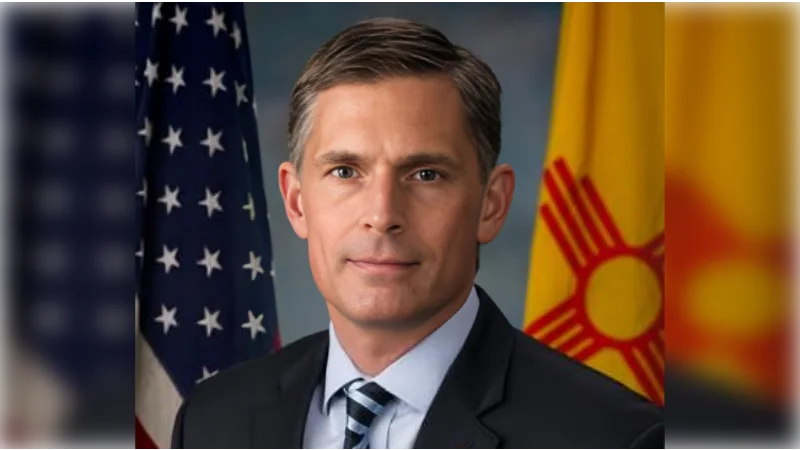
During a hearing of the U.S. Senate Energy and Natural Resources Public Lands, Forests, and Mining Subcommittee, Senator Martin Heinrich (D-N.M.), who serves as Ranking Member, delivered remarks advocating for the cleanup of mining pollution in the Pecos Watershed and for protection measures for the Gila River.
Heinrich addressed two bills supported by New Mexico constituents: one to designate portions of the Gila and San Francisco Rivers as wild and scenic rivers, and another to prevent new mining claims in the Upper Pecos Watershed. He noted that S. 1476 would provide permanent protection for over 400 miles of streams and rivers in the Gila region.
“The first, to designate portions of the Gila and San Francisco Rivers as wild and scenic rivers, represents decades of work by the local community to protect the Gila River and its incredible watershed. S. 1476 would provide permanent protection for more than 400 miles of streams and rivers in the Gila region,” Heinrich said.
Heinrich also discussed ongoing issues with pollution from historical mining operations in northern New Mexico. “Because the waste and tailings from those operations have never been adequately cleaned up, the communities and landowners in the Pecos area still suffer with polluted water and soil today,” he stated.
He recalled past incidents such as a dam failure at Alamitos Canyon Mill in 1973 that sent mine pollution into Alamitos Creek and the Pecos River. “The tailings were never remediated, and the dam was never fixed, so pollution continued to stream into the watershed,” Heinrich said.
He also referenced a significant fish kill event: “And then in 1991, an early spring rain washed mill waste into the river, resulting in a massive fish kill. Ninety-thousand trout died at the Lisboa Springs Fish Hatchery alone, not to mention the damage to the Pecos River as a whole.”
According to Heinrich, cleanup efforts since these events have been limited, leaving residents exposed to ongoing pollution. He described recent photos showing mine pollution flowing into fields during heavy rains or snowmelt: “And these are not historical photos—they were taken earlier this year. This is the pollution that my constituents are still living with today.”
Despite this history of contamination, companies are seeking permits for new mines in areas already affected by previous operations. Heinrich questioned this approach: “How can we ask these people to live next to a new mine when this is what the land in the basin looks like every time it rains?”
Heinrich emphasized that there is no local support for new mining proposals: “There is not a single person in this community that I’ve met with that supports this proposed mine. Not one—not the county commissioners, not local businesses, not the state, the farmers, not tribes, not acequia parciantes—like literally no one.”
He also paid tribute to Ralph Vigil, a lifelong resident who advocated for protecting local waterways before his death earlier this year.
The hearing was convened as part of broader efforts by lawmakers to address environmental concerns related to public lands management.