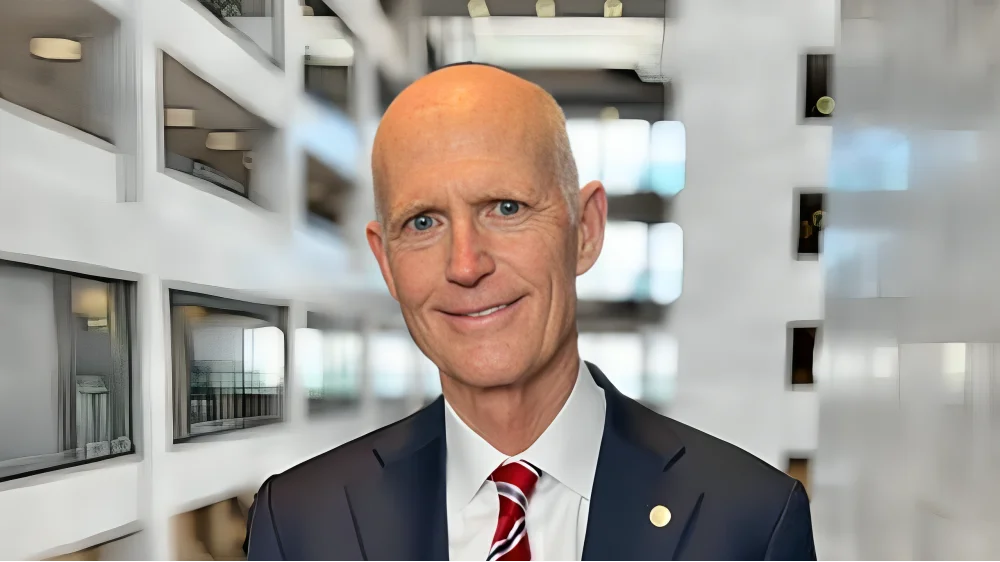
U.S. Senate Special Committee on Aging Chairman Rick Scott and Ranking Member Kirsten Gillibrand have introduced the National Strategy for Combating Scams Act in response to the increasing number of scams targeting older Americans. The proposed legislation aims to improve federal coordination by establishing a working group led by the Federal Bureau of Investigation, standardizing how scams are reported, and including input from victims, law enforcement, and private organizations.
Chairman Scott has previously advocated for senior protection measures and highlighted that new technologies like artificial intelligence and deepfake technology have made scams more sophisticated. According to the committee’s 2025 Fraud Report, seniors experienced significant financial losses due to fraud in 2024—over $4.8 billion for those aged 60 and above, with an additional $2.5 billion lost by people aged 50-59. To address these issues, Scott has supported several legislative efforts such as the STOP Scammers Act and initiatives like National Slam the Scam Day.
The National Strategy for Combating Scams Act is cosponsored by Senators Ashley Moody and Mark Kelly. A similar bipartisan bill has been introduced in the House of Representatives by Congressmen Derek Schmidt and Gabe Amo.
In a statement, Chairman Rick Scott said, “Families across the country are being overwhelmed by increasingly sophisticated scams, and Washington has been far too slow to respond. As chairman of the U.S. Senate Special Committee on Aging, I am proud to join Ranking Member Gillibrand in this bipartisan effort to finally bring federal agencies together, cut the duplication, and create a real national plan to protect seniors and hardworking Americans. After the findings of our fraud report, it's clear we need a coordinated strategy, not more bureaucracy or new spending, and this bill delivers exactly that. I’m proud to help lead this charge to crack down on criminals and keep Americans safe.”
Ranking Member Kirsten Gillibrand added, “Last year alone, Americans lost over $16 billion to scams. That’s a staggering amount of money that’s been stolen from our families, our neighbors, and, disproportionately, our seniors. I’m proud to introduce the bipartisan National Strategy for Combating Scams Act to help make sure seniors don’t get scrooged this holiday season. It’s clear that we need a coordinated national strategy to tackle the increasingly sophisticated scams targeting our seniors, and this legislation would bring that to fruition. I look forward to working with my colleagues on both sides of the aisle to get this vital bill across the finish line.”
Senator Ashley Moody commented on her experience as Florida's Attorney General: “Scams are on the rise in the U.S. and Americans are paying the price. As Attorney General in Florida, we were innovative and aggressive in cracking down on fraudsters recovering millions. As the newest U.S. Senator, I am bringing the same focus and tenacity to this ever-growing problem, and I urge my colleagues to do the same. Pass the National Strategy for Combating Scams Act.”
Senator Mark Kelly noted gaps in current federal response: “Every year, scammers steal billions of dollars from Americans, harming families, especially seniors. But the federal government lacks a strategy to address the scope and speed of these schemes. This bipartisan bill will create a coordinated approach to crack down on fraud, better protect families and seniors, and hold scammers accountable.”
Congressman Gabe Amo stated his support for unified action: “I’m proud to introduce the bipartisan National Strategy for Combating Scams Act in the House, alongside my colleagues in the Senate, to ensure we are addressing the rising scam threat in a coordinated and strategic manner. I look forward to working together as the national strategy is developed to keep fighting scammers and keep Rhode Islanders money where it belongs—in their pockets.”
The bill has received endorsements from several organizations including AARP; Aspen Institute Financial Security Program; Chamber of Progress; Global Anti-Scam Alliance (North America Chapter); Justice in Aging; Meta; National Academy of Elder Law Attorneys; National Adult Protective Services Association; National Asian Pacific Center on Aging; National Association of Social Workers; National Caucus & Center on Black Aging Inc.; National Center for Victims of Crime; National Crime Prevention Council; National Sheriffs’ Association; as well as Stop Scams Alliance.