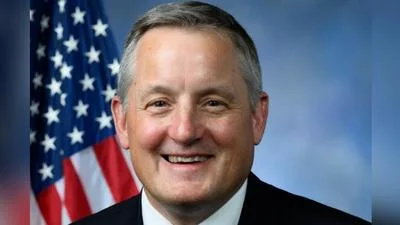
Chair Laurel Lee of Florida's 15th district delivered opening remarks at a Subcommittee on Elections hearing focused on potential updates to the National Voter Registration Act (NVRA). The hearing is part of the Committee on House Administration’s ongoing oversight of federal election law.
Lee highlighted that since the NVRA was enacted 32 years ago, active voter registration among eligible Americans has risen from 68 percent in 1992 to over 86 percent today. She credited this increase as a positive development for democracy and emphasized the importance of continuous feedback from election officials regarding election administration.
Lee addressed ambiguities in the NVRA, noting: “Currently, the NVRA requires that states conduct a ‘general program that makes a reasonable effort to remove the names of ineligible voters from the official list of eligible voters.’ This ambiguous language has left courts to issue broad rulings about what constitutes general and reasonable.”
She pointed out that due to this ambiguity, some states are neither required nor permitted to remove ineligible voters for reasons such as errors on registration forms, lack of U.S. citizenship, criminal convictions, or mental incapacity, even if those reasons align with state laws.
Lee referenced testimony indicating that certain provisions in the NVRA prevent robust list maintenance by election officials. She cited examples such as blackout periods for list maintenance and delays in removing voters who have moved. According to Lee, sometimes an official must wait two general election cycles before removing an ineligible or relocated voter unless specifically requested by the voter.
She also discussed how technological advances have made parts of the NVRA outdated. For example, while many tasks can now be done more efficiently with modern technology, the law still requires voter rolls be made available for inspection via photocopying. Lee said: “As a result, a Court of Appeals has found that the state of Alabama can charge enormous amounts for printing copies of its voter rolls, as opposed to producing and delivering digital copies for a fraction of the cost.” She used this case to illustrate why updating the law is necessary.
On confirming citizenship status during voter registration, Lee stated: “The NVRA does not currently require an applicant to prove their citizenship beyond an attestation clause and a signature.” She referenced recent headlines involving Ian Roberts—an undocumented immigrant who managed to register twice to vote in Maryland—as evidence that changes may be needed. Last week, Lee and Chairman Steil sent a letter to Maryland’s State Board of Elections seeking details about how this occurred.
Lee concluded her remarks by emphasizing shared goals: “Let me end with something I think we all can agree on: improving the administration of our elections and ensuring voters' voices remain heard should be central to all of these discussions. Election officials on the ground need access to the right tools and clear direction to do this.”
The hearing is expected to include further discussion on possible reforms aimed at strengthening election integrity and efficiency across the country.