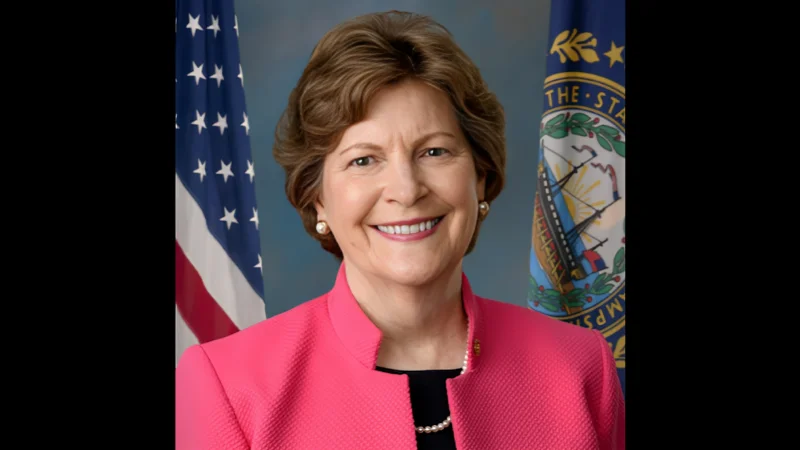
U.S. Senator Jeanne Shaheen, Ranking Member of the Senate Foreign Relations Committee, and Democratic members of the committee released a report on Mar. 10 warning that President Trump's approach to China has weakened the United States' global position and imposed economic costs on American families. The release comes as President Trump prepares for a trip to Beijing later this month.
The report, titled “The Price of Retreat 2.0: Undermining America’s Economic Edge and Alliance Advantage,” argues that recent policies have increased costs for households, destabilized markets, and pressured manufacturers and farmers without achieving significant changes in China's behavior. It also highlights how diplomatic influence has waned while China expands its global reach.
“This report makes clear that the consequences of the Trump Administration’s global retreat that we warned about last year are no longer theoretical—they are being felt by American families and businesses every day,” Shaheen said. She added, “The Administration’s trade wars, cuts to innovation and weakening of our alliances are not strengthening America’s position against China, they are undermining it.”
Key findings include job losses linked to tariffs, with small businesses reportedly laying off 120,000 workers in November 2025—the highest monthly total in five years—and a net loss of 19,000 jobs since new tariffs were introduced. The report also points to worker shortages in national security sectors due to travel bans and visa restrictions, while Chinese universities have surpassed their U.S. counterparts in scientific output.
Diplomatically, more than half of U.S. embassies lack Senate-confirmed ambassadors while China maintains an extensive diplomatic presence worldwide. The report notes reductions in foreign assistance funds and shifts in alliances following incidents such as the Greenland crisis and changes in U.S.-Taiwan policy.
Recommendations include legislative action to restrict advanced technology sales to adversaries, support for Ukraine's security guarantees, oversight of foreign assistance spending, and prioritizing qualified diplomatic nominations.
The Senate Foreign Relations Committee plays a central role in shaping U.S. foreign policy through treaty examination and legislation development according to its official website. The committee designates its Chairman for majority leadership and Ranking Member for minority leadership as detailed online. Since its establishment in 1816 as one of the original standing committees according to its history, it has influenced major decisions such as supporting the Truman Doctrine (1947), Marshall Plan (1948), and rejecting the Treaty of Versailles (1919-1920) as noted by official records.
Shaheen concluded that President Trump will enter talks with President Xi Jinping "in a significantly weaker position because of his actions over the last year," stating: "The President will have a weak hand to play in Beijing, and it is the American people who will pay the price."