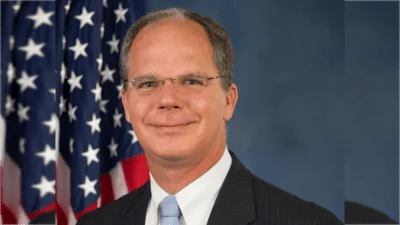
Chair Stephanie Bice (OK-05) delivered opening remarks at the Subcommittee on Modernization and Innovation hearing, titled "The Future of Constituent Engagement with Congress." The hearing focused on exploring new ways to improve how members of Congress communicate with their constituents.
In her statement, Chair Bice explained the subcommittee’s recent name change and emphasized ongoing efforts to update technologies used in the House. She noted, "The behind-the-scenes work of closing out recommendations made by the Select Committee on Modernization continues, but we also need to look forward and determine how we can ensure that the House’s technologies and systems continue to evolve instead of getting stuck in time."
She highlighted a recent collaboration involving Microsoft Copilot: "Bringing Microsoft Copilot to the House community is a great example of how the Subcommittee is leaning into this work. For the past couple of months, we’ve worked closely with the CAO on a comprehensive plan to provide Copilot licenses and targeted training to House staff."
Bice reported that 150 Member offices currently have Copilot licenses, with plans for wider availability in January. She described integrating artificial intelligence as "a game-changing first step in making the House a more efficient and effective institution."
Addressing constituent engagement, she stated, "Communicating with our constituents is absolutely essential for doing the jobs we were elected to do. Assisting with casework, responding to questions, and explaining our positions on the issues of the day requires interacting with our constituents in effective and meaningful ways." Bice pointed out that as communication technology evolves quickly outside Congress, it is important for legislative offices not to fall behind: "Rather than assume they’ll read our letters and emails, we should figure out how to meet our constituents where they’re at - today, tomorrow, and in the future."
She acknowledged that existing Constituent Management Systems (CMS) have not kept pace with technological advances: "For decades, the House has relied on a small number of Constituent Management Systems... I don’t think any of us would call them 'cutting edge.' That’s not a criticism as much as it’s a reflection of the fact that the market here is very limited and lacks the kind of competition that’s typically needed to spark innovation."
Bice suggested rethinking constituent engagement strategies: "Members represent vastly different districts and constituencies so maybe a 'build-your-own' system makes more sense than a 'one-size-fits-all' system. That way, Members could choose technologies and platforms that best meet the needs of their districts and constituents." She concluded by expressing interest in learning from other jurisdictions about innovative approaches.
The Subcommittee on Modernization and Innovation operates under the broader jurisdiction of the House Administration Committee, which oversees administrative operations within the U.S. House of Representatives. The committee also supervises federal elections, Capitol security measures—such as those enhanced after major incidents—and played an important role in initiatives like passing voting system improvements through acts such as Help America Vote Act in 2002 (source). The committee was established by unifying prior committees under legislation passed in 1947 (source).