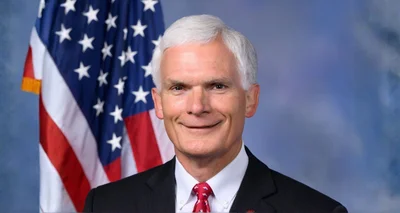
The Subcommittee on Modernization and Innovation of the Committee on House Administration recently held a hearing titled "The Future of Constituent Engagement with Congress." The session focused on how technology, especially artificial intelligence (AI), can improve communication between members of Congress and their constituents.
Witnesses included Dr. Michael Neblo from The Ohio State University Institute for Democratic Engagement and Accountability, Ms. Aubrey Wilson from PopVox Foundation, Dr. Beth Simone Noveck, Chief AI Strategist for the State of New Jersey, and Mr. Ken Ward, Director of House Digital Services.
During the hearing, Chair Stephanie Bice asked about building AI tools that could help congressional offices respond to constituents in a way that reflects each office's unique perspective. Dr. Beth Simone Noveck explained: "Thank you for the question. I think one of the things that we've done in New Jersey, first of all, and that we've done through our work building tools for other states as well, is to start with internal facing chat bots. So I think it's really important to recognize that these tools are extremely good for synthesizing information. And that's what's made it possible to do things like train an AI tool on a specific corpus of documents. So that would mean a member could. And it's something, by the way, that together with PopVox, the AI for impact program, built the first and tested the first chatbot for a Member, where we loaded it with all of that Member's position statements, bill drafts, etc. Then the tools are getting much better at restricting responses only to what is in that corpus of knowledge. So that's one way to avoid the hallucination problem number one. Number two, internal facing tools. So that what you're doing is giving staff a tool that they can use to quickly give answers to people. So in New Jersey, for example, we're not using chatbots to answer constituent calls. You're not getting a machine. What you're getting is a human who in turn has a good lookup tool on their end that's allowing them to synthesize a lot of information. So I think the best place to start is with those tools for the people answering the phone to make their jobs easier, but the tools are allowing us to get better, especially when you train them to restrict their answers to a specific corpus of knowledge. That's also what's allowed us in New Jersey to bring down the time it takes to answer a call from 40 minutes to now, three minutes, and modernize all of our call centers using some of these practices."
Rep. Mike Carey raised concerns about public trust in Congress but noted survey results showing 70% willingness among respondents for more direct engagement with elected officials on key issues through deliberative town halls.
Dr. Michael Neblo described how these forums differ from traditional surveys: "Sure, thank you for the opportunity. The real difference, there are a few differences in deliberative town halls. One of them is that, as if we were doing a survey, we try to get a real random sample of the entire constituency in affirmatively and personally invite them. It turns out that it can seem like there's a contradiction. Citizens saying they don't think Members care what they think and yet, they want to engage... Your average constituent does not want to yell at you... They want to hear what you have to say before making up their mind... We do a survey beforehand... Again, the forums are online... We're building a bespoke platform that's very easy to use... We'll be linked to the 14 most spoken languages in the United States... We have oral versions... We have real time captioning for the hearing impaired..."
Chair Bice also asked Ms. Aubrey Wilson about lessons learned from international legislatures' use of AI.
Ms. Aubrey Wilson responded: "Thank you so much for these questions... Our work with international legislatures has actually been extremely eye-opening experience... I took for granted the incredibly robust IT infrastructure and all benefits this body has... Other countries are using AI just digitizing documents or making data accessible while U.S Congress already has such strong IT foundation lets you build on top ... Second element is having internal processes allowing testing new tools quickly ... With tiered system expediting ability new tools tested low risk then adopted so staff & Members benefit..."
The House Administration Committee oversees House operations including federal elections and Capitol security measures following major events such as September 11 attacks and January 6 incident (https://cha.house.gov/). As part of its responsibilities within joint committees like Library and Printing (https://cha.house.gov/), it manages administrative matters affecting congressional activities nationwide (https://cha.house.gov/). The committee was established by legislation consolidating prior groups into its current form in 1947 (https://cha.house.gov/).
These discussions highlight ongoing efforts by congressional subcommittees and experts seeking ways technology may enhance democratic engagement between lawmakers and citizens.