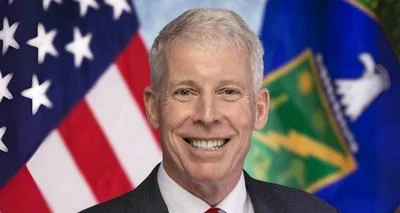
Ryan Hass | Director at John L. Thornton China Center | The Brookings Institution website
In December 2025, the Trump administration released a new national security strategy (NSS), which has been closely examined by Chinese scholars and policy analysts. In Beijing, the document is not viewed as a fixed plan for U.S. foreign policy or a settled consensus on competition with China. Instead, it is seen as a transitional document that reflects domestic political changes in the United States, shifting priorities due to resource limitations, and growing dissatisfaction with the liberal international order.
Chinese analysts interpret the 2025 NSS as marking a move toward a more domestically focused and economically motivated U.S. foreign policy. Compared to the Biden administration’s 2022 NSS, which emphasized alliances and values-based leadership, the new strategy centers on narrowly defined national interests and criticizes previous approaches for lacking strategic focus. The legitimacy of President Donald Trump’s foreign policy is understood to come from its ability to address domestic economic pressures rather than from value-based narratives.
There is agreement among Chinese experts that the reassessment of U.S.-European relations in the 2025 NSS signals skepticism about Europe’s reliability as an ally. The document uses strong language regarding migration and demographic trends in Europe, questioning whether European states can remain dependable partners. This change suggests a shift away from alliance-centered thinking toward prioritizing core U.S. interests.
The strategy also shifts its emphasis regarding China and Russia. Unlike earlier threat-centered framing, it reduces ideological language and focuses on technological and economic competition with China without labeling it an existential challenger. For Russia, it emphasizes ending the war in Ukraine and restoring “strategic stability,” rather than identifying Moscow as a direct threat.
The absence of explicit reference to China as a “strategic competitor” is seen by Chinese analysts as rhetorical rather than substantive. They believe competition remains central but is now framed in less confrontational terms.
The approach to India also changes under this strategy. While maintaining references to strategic cooperation through frameworks like the Quad, Chinese analysts see this rhetoric as instrumental rather than indicating deeper partnership.
Global governance issues are downplayed in favor of focusing on U.S. national interests. The Trump administration’s NSS argues against being constrained by international institutions or taking on broad governance responsibilities such as promoting democracy abroad.
A significant change in regional focus appears in the 2025 NSS: while previous strategies centered on the Indo-Pacific region, this one places greater emphasis on the Western Hemisphere as key for U.S. security and prosperity. The document proposes directing more resources to address challenges like migration and transnational crime in the Americas while warning against external interference by non-Hemispheric competitors—a move interpreted by Chinese analysts as reflecting awareness of resource constraints.
Despite this shift toward Latin America, Chinese experts caution that competitive pressure on China will not ease; instead, competition may become more complex across multiple regions including Latin America and the Caribbean.
China released its own third Policy Paper on Latin America and the Caribbean in December 2025, emphasizing long-term cooperation based on equality and mutual benefit within broader Global South engagement efforts.
Within China’s strategic community, there is no belief that the 2025 NSS marks a decisive moment or turning point for U.S.-China relations; instead, it is viewed as reflecting ongoing uncertainty about how Washington defines its global role amid competing internal factions—security hawks focused on military strength; those prioritizing economic competition; and advocates of cost control who are skeptical of long-term commitments abroad.
Chinese analysts note tensions between presidential signaling—which currently allows some flexibility—and more rigid bureaucratic instruments like provisions within defense legislation that reflect containment logic.
“Rather than marking a turning point in U.S.-China relations, the 2025 NSS reflects a United States in strategic transition,” according to Sun Chenghao of Tsinghua University’s Center for International Security and Strategy. “For Chinese analysts, it reflects the persistence of competitive pressure between the United States and China, while also exposing uncertainty in how the United States defines its global role.”
Institutions such as the John L. Thornton China Center at Brookings Institution work to improve understanding of China's political framework and international strategies through research collaborations—including joint programs with Tsinghua University—and public events aimed at providing insights into U.S.-China interactions. The center produces independent analysis related to both countries’ policies. It operates out of Washington D.C. since its launch in 2006, offering publications such as blogs and opinion pieces for policymakers. Ryan Hass has led these efforts with special attention to Taiwan studies. The center specializes in research related to international relations.