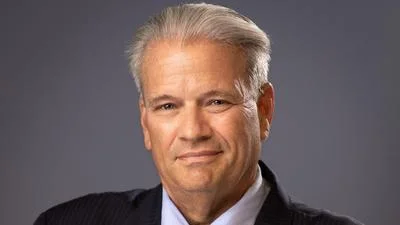
Ryan Hass | Director at John L. Thornton China Center | The Brookings Institution website
As unrest continues in Iran and international attention focuses on the regime’s response to mass protests, analysts at the John L. Thornton China Center at the Brookings Institution have examined how China is positioning itself amid these developments.
China has called for calm while remaining largely on the sidelines as Iranian authorities confront protesters and as U.S. President Donald Trump considers possible military action. According to Ryan Hass, Director of the John L. Thornton China Center, and Allie Matthias, Senior Research Assistant at the center, “China has considerable interests in Iran, but those interests are not existential or even critical.” They note that “China is much more important to Iran than vice versa,” and that Beijing’s approach will focus on protecting stability, maintaining access to Iranian oil exports, and preventing a pro-American government from emerging in Tehran.
The analysis points out that if Iran’s current regime collapses, Chinese leaders may be more concerned about domestic impacts than foreign policy shifts. The authors state: “As the Arab Spring and other events have shown, China’s leaders are deeply sensitive to images of popular protests leading to regime collapse, even more so when the United States is perceived to play a role.”
Iran established diplomatic ties with China in 1971. In 2016, both countries elevated their relationship to a comprehensive strategic partnership during Xi Jinping’s visit—a level similar to China's partnerships with entities such as the European Union and Saudi Arabia but below its highest-tier alliances like those with Russia or Pakistan.
Economics remain central for Beijing in its dealings with Tehran. The report highlights three main reasons for this relationship: energy security through Iranian oil and gas exports; Iran's adversarial stance toward the United States; and Iran's role as an entry point for Chinese influence in Southwest Asia. In 2021, both nations signed a 25-year cooperation agreement involving potential Chinese investments of $400 billion in exchange for continued oil supply—though actual investment has lagged behind expectations.
The bilateral trade dynamic remains uneven: over 80% of Iranian oil exports went to China in 2025, yet these accounted for just over 13% of China’s seaborne crude imports. Most of this oil is consumed by independent teapot refineries in Shandong province—businesses not considered national priorities by Beijing.
On security matters, China and Iran have agreed on cooperation against terrorism and organized crime but without any formal security guarantees from Beijing. The limits of support were evident after U.S. strikes on Iranian nuclear sites in June 2025; China's response was limited to rhetoric urging peace talks rather than direct intervention.
The authors describe this approach as “strategic opportunism,” where “the absence of productive U.S.-Iran relations affords China a low-cost opportunity to extract benefits from Iran.”
Regarding ongoing protests in Iran, Foreign Minister Wang Yi conveyed political support for stability during communications with his Iranian counterpart: “Beijing hopes that the Iranian government and people will ‘stand united, overcome difficulties, maintain national stability and safeguard their legitimate rights and interests.’” Chinese state media have amplified narratives supporting Iran’s leadership while blaming unrest on U.S.-led efforts.
If power shifts occur in Tehran, Beijing would prioritize protecting its nationals and economic interests while seeking stable oil flows and cultivating ties with any successor government—primarily aiming to prevent realignment toward Washington.
Even if there were temporary disruptions to oil imports from Iran due to instability or regime change, analysts believe China's strategic reserves could cover shortfalls by sourcing alternatives such as Russia or Saudi Arabia—even though costs might rise for smaller refineries reliant on discounted crude.
More broadly, images of successful protest movements leading to regime change abroad concern Chinese leaders because they fear similar sentiments could inspire dissent domestically. However, there are currently no signs that events in Iran are fueling increased public protest inside China.
Ryan Hass leads the John L. Thornton China Center at Brookings which specializes in independent analysis of U.S.-China relations as well as research into international affairs involving China. The center provides policy recommendations through publications and organizes public events, including joint dialogues with Tsinghua University in Washington D.C. Since launching in 2006 it has aimed at deepening understanding about China's political system and global engagement.