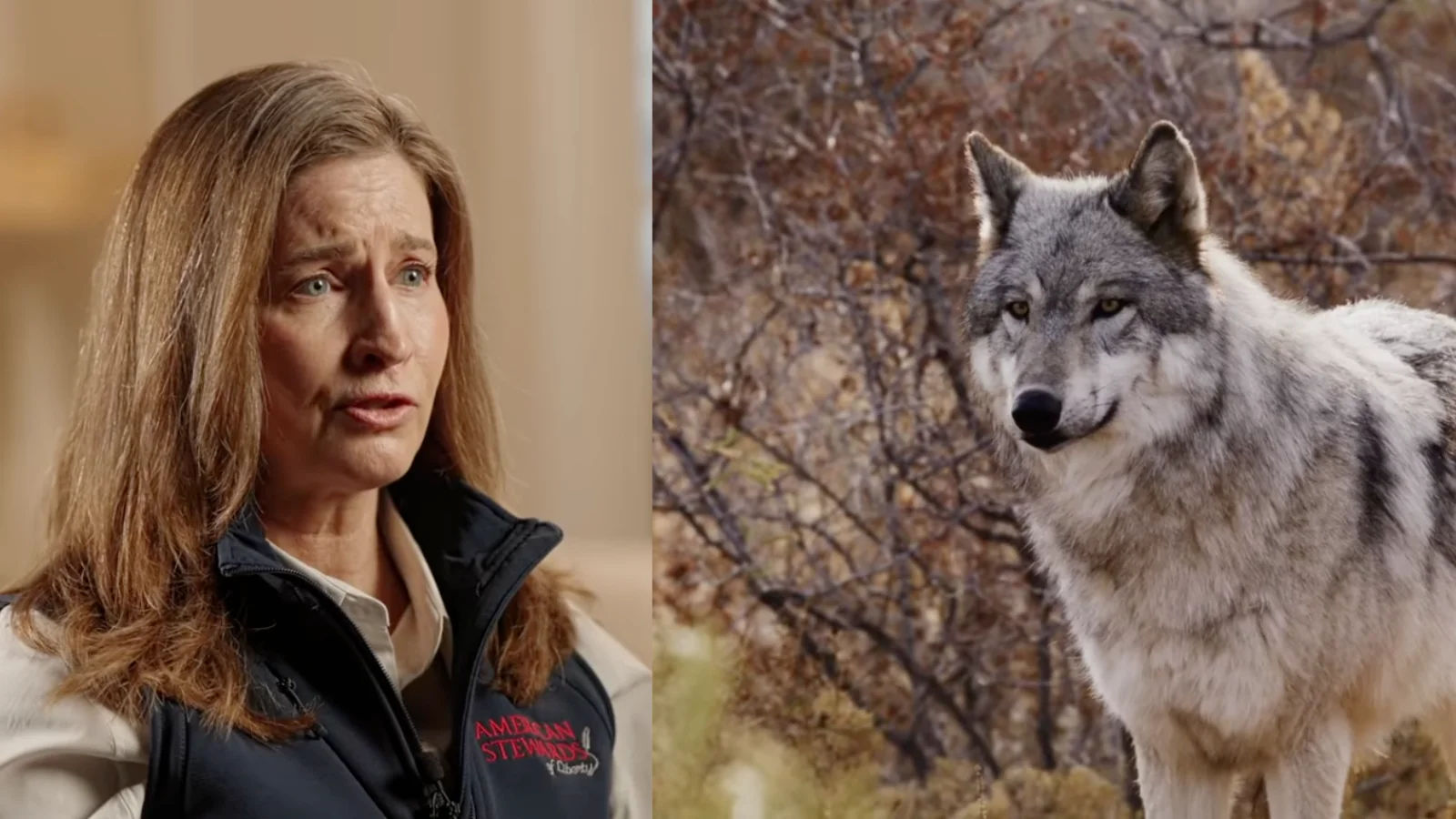
Margaret Byfield, executive director of the American Stewards of Liberty, said the Endangered Species Act (ESA) enables federal overreach in Colorado’s wolf reintroduction, prioritizing regulatory agendas over landowners, and called for reforms to protect property rights.
"The Endangered Species Act, in its current form, has become an outdated and ineffective tool for federal overreach that prioritizes radical agendas over the stewards of the land who have protected our natural resources for generations," said Byfield. "Our film ‘Thrown to the Wolves' reveals the human cost of this imbalance, from sleepless nights patrolling herds to uncompensated losses that threaten family legacies. It's time for Congress to enact meaningful reforms to restore accountability and protect private property rights."
According to a press release from the American Stewards of Liberty dated January 21, 2026, the organization has released a film titled "Thrown to the Wolves." The film documents the consequences of gray wolf reintroduction in Colorado, highlighting issues such as livestock destruction leading to significant economic losses. It critiques the ESA for its low delisting success rate—only 62 species out of over 1,600 listed have been delisted in 50 years. The organization proposes reforms through its Small Landowners Protection Package to limit critical habitat designations and shift predator management responsibilities to states.
In Colorado, ranchers have submitted compensation claims totaling $582,000 to Colorado Parks and Wildlife for wolf-related livestock impacts in 2024. These claims cover confirmed kills, missing animals, weight reductions, and lower conception rates in areas like Grand County. Such concentrated losses pose threats to multigenerational ranches and rural economies reliant on agriculture. A University of Arizona study suggests that even moderate wolf presence can significantly decrease annual ranch revenue.
Nationwide under the ESA, only a small fraction of listed species have been delisted over five decades. This inefficiency maintains prolonged land use restrictions impacting rural property owners. Data from the Western Caucus Foundation confirm this trend and underscore the need for updates to prevent ongoing economic burdens on agricultural sectors.
Environmental organizations have filed over 570 lawsuits related to the ESA, costing taxpayers more than $15 million in attorney fees for federal defenses. These legal actions often enforce listings that restrict private land use and impose additional financial strains on landowners through litigation-driven regulations. Records from the House Natural Resources Committee detail these expenditures.
Byfield's advocacy for property rights stems from her personal background; she grew up on a ranch in central Nevada and became involved following her family's federal court case against government actions in 1991. She founded Stewards of the Range in 1992, which later merged into American Stewards of Liberty in 2009.