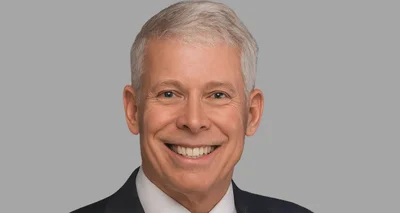
Ryan Hass | Director at John L. Thornton China Center | The Brookings Institution website
Over the past twenty years, India’s approach toward China has shifted from viewing its neighbor as a possible partner to seeing it as an obstacle to Indian goals. This was the focus of testimony delivered by Tanvi Madan, Senior Fellow at the Center for Asia Policy Studies, before the U.S.-China Economic and Security Review Commission during a hearing on February 17, 2026.
Madan stated that this change in perspective has affected India’s policies and partnerships. She noted that despite efforts to reengage diplomatically with China, competition between the two countries has intensified. Key events driving this shift include border disputes such as the fatal military clash in 2020 and ongoing friction over China’s activities in South Asia and the Indian Ocean.
According to Madan, New Delhi views China’s close ties with Pakistan as an effort to contain India. India is also concerned about Beijing’s growing security and economic influence across South Asia and beyond, which it sees as limiting its own interests. These concerns have led to skepticism regarding China-led initiatives like Belt and Road.
India is wary that “Beijing seeks a unipolar Asia where it gets to set the terms,” while New Delhi prefers “a multipolar Asia where countries have room to make their own choices.” Madan explained that India considers such regional multipolarity essential for global balance and for realizing its ambition of being a leading power.
While India shares some positions with China—such as opposition to Western sanctions and support for sovereignty—they differ on many issues including trade, multilateral representation, and membership in groups like the Nuclear Suppliers Group or United Nations Security Council. “Sino-Indian divergences have outweighed convergences on the global stage,” Madan said.
She added that New Delhi is concerned about Beijing seeking to undermine India’s role among developing nations or within organizations like BRICS. Furthermore, India does not support Chinese efforts—sometimes joined by Moscow—to steer international groupings away from non-Western platforms toward anti-Western stances.
These apprehensions have prompted India to increase engagement in both its immediate region and across the Global South. The gap between Chinese and Indian capabilities has led New Delhi to welcome greater American presence in Asia. “In contrast to Beijing, New Delhi has...wanted to see a persistent or expanded American presence in the region,” Madan said.
India has built closer ties with countries such as Australia, France, Japan—and especially with the United States—to compete for influence against China throughout the Indo-Pacific region. Participation in smaller groupings like the Quad reflects this approach.
Madan described Washington as “a useful partner” for balancing China: “This made India more responsive to U.S. efforts...and more ready to join U.S. initiatives on issues such as critical and emerging technologies and supply chain resilience.”
However, she acknowledged debate within India over how far cooperation with Washington should go: “India’s current concerns about the U.S. approach toward India and China...could limit the pace and extent of Indian cooperation.”
Madan suggested several measures going forward: regular assessments of Sino-Indian dynamics; enabling Indian capabilities through allied support; more frequent consultations between U.S., Indian officials regarding regional developments; coordination ahead of key summits; increased Quad activities; mapping supply chain vulnerabilities; congressional exchanges focused on Indo-Pacific issues; and visits by staffers involved with regional policy.
The John L. Thornton China Center at Brookings Institution produces independent analyses related to U.S.-China relations and China's domestic evolution. The center also collaborates with Tsinghua University for joint events and specializes in research relevant to international relations as part of Brookings. Publications produced by the center include blogs, opinion pieces, monographs, and books intended for policymakers and broader audiences. Ryan Hass leads this center while holding a chair focused on Taiwan studies .