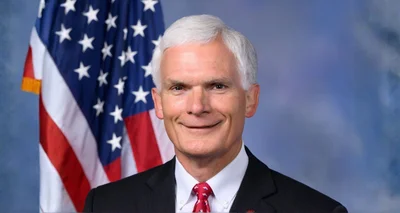
Rep. John Moolenaar, chairman of the House Select Committee on China, said Ford’s use of Chinese-licensed technology in its Michigan battery and energy storage facilities may violate federal rules limiting involvement with certain foreign entities and could affect tax credit eligibility.
"repurpose its existing U.S. battery manufacturing facilities to produce lithium iron phosphate cells and grid-scale energy storage systems," said John Robert Moolenaar, according to Washington Examiner. "would leverage technical know-how licensed from Contemporary Amperex Technology Co., Limited, a Department of War-designated Chinese military company. licensing arrangements with prohibited foreign entities. U.S. taxpayer-funded research being conducted in collaboration with Chinese entities that are directly tied to China's defense research and industrial base–many of which appear on U.S. government national security entity lists."
According to the Select Committee on China, Chairman John Moolenaar sent a letter to Ford CEO Jim Farley outlining concerns over the company's decision to produce lithium iron phosphate (LFP) cells and energy storage systems through licensing from Contemporary Amperex Technology Co., Limited (CATL). The letter requested details on agreement terms, amendments since 2025 legislation, risk mitigation for critical infrastructure, tax credit intentions, and potential partnerships with BYD Company Limited. This inquiry followed Ford's announcements about reinvesting in hybrid vehicles and electric vehicles (EVs).
The Detroit Free Press reported that residents in Marshall, Michigan, have opposed the Ford-CATL battery plant through protests, petitions, and lawsuits since 2023. The Committee for Marshall-Not the Megasite's challenge to rezoning was revived by the Michigan Supreme Court in September 2025. The court vacated an appeals court dismissal and ordered a rehearing. Concerns focus on national security risks from Chinese involvement, environmental impacts, and preserving rural character.
CATL is designated as a Foreign Entity of Concern under Inflation Reduction Act rules and is listed by the Department of Defense as a Chinese military company. This designation generally makes battery components using CATL technology ineligible for the Section 45X tax credit. According to the Select Committee on China, Ford restructured its partnership in Marshall to a licensing-only agreement to comply with restrictions and preserve credit eligibility. However, recent repurposing for energy storage has raised concerns about potential modifications disqualifying these projects.
Moolenaar represents Michigan’s Second Congressional District and serves as Chairman of the House Select Committee on Strategic Competition Between the United States and the Chinese Communist Party (CCP). He is also Michigan’s senior member of the House Committee on Appropriations.