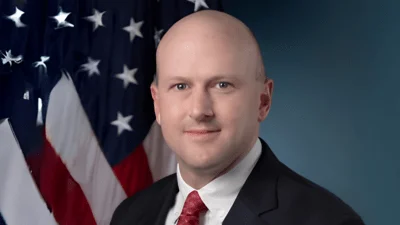
U.S. Senate Democratic Whip Dick Durbin, the Ranking Member of the Senate Judiciary Committee, questioned witnesses during a Senate Judiciary Subcommittee on Border Security and Immigration hearing focused on fraud in Minnesota. Durbin criticized the Trump Administration for its approach to immigration enforcement and policies affecting immigrant communities.
During the hearing, Durbin addressed concerns about the shortened training period for U.S. Department of Homeland Security (DHS) agents who are responsible for carrying out large-scale deportations. “The Big Beautiful Bill Act approved 18,500 new agents – ICE agents, 10,000, [and] 8,500 CBP agents. I believe that [DHS] Secretary Noem has identified their training period to be 47 days as a tribute to the President, the 47th President of the United States. When I talked to police chiefs and mayors back home, they said you cannot prepare an officer for contact with the public in that short a period of time. Do you have any thoughts on the subject?” Durbin asked David Bier, Director of Immigration Studies and Selz Foundation Chair at the CATO Institute.
Mr. Bier responded by stating that reducing training for federal agents is dangerous, especially as their responsibilities increase under current administration policies. He advocated for more comprehensive training to ensure officers adhere to legal standards.
Durbin raised further concerns about ICE agents gaining experience only through fieldwork rather than structured training programs. He also questioned plans to expand detention centers for immigrants detained by DHS agents. “What are they going to do with all of these people [DHS agents] as they are learning on-the-job with weapons in their hands, wearing masks so they can be identified? There is speculation in Washington about detention facilities. How many will there be?...Visualize the America they’re designing for us in the future with those parameters,” Durbin said.
Bier explained that there have been instances where U.S. citizens were arrested and detainees were denied access to attorneys under current practices. He warned that without additional oversight over administration actions, due process could be denied even to U.S. citizens.
Durbin noted that instead of targeting individuals accused of serious crimes, DHS has detained and deported both U.S. citizens and immigrants without criminal records: “The President has been clear about what his goal is, hasn’t he? He’s told us he’s going after murderers, rapists, terrorists… childhood predators, ‘the worst of the worst,’ he says. How are they doing on that score?”
Bier cited data showing only five percent of those detained by DHS had violent crime histories: “One out of 20 fits that category [of having a history of violent crime]. So you have 19 people that are not culpable, not liable, not criminally responsible in any way, and they are the ones who are being swept up in this detention,” Durbin said.
Bier added that while detainees receive threat level assignments from authorities, only eight percent fall into the highest category; most—73 percent—are not assigned any threat level at all.
Durbin concluded by recounting an incident involving Marimar Martinez—a Chicago resident and teacher—who was shot multiple times by a CBP agent during “Operation Midway Blitz.” Martinez was initially charged but later cleared; meanwhile public statements from DHS labeled her a domestic terrorist despite no weapon charges being filed against her.
“I commend to you the case of Marimar Martinez in October, who was shot on the streets of Chicago. A teacher at a Montessori school, she was shot in her car five times and survived, God knows how. She survived and what happened to the charges against her? Eight weeks later, dropped all charges. It could be because the vehicle she supposedly rammed had been moved from Chicago to Maine be repainted so there was no evidence at her trial. To think what happened to this 30-year-old woman’s life, born and raised in Chicago, an American citizen, shot by [CBP] agents on the streets of Chicago. They bragged about it. One of the shooters said, ‘I got five bullets in 7 holes.’ He’s very proud of himself,” Durbin concluded his remarks.
The Senate Judiciary Committee plays a significant role in shaping constitutional protections and public safety through its legislative work and oversight functions (official website). The committee reviews legislation related to civil rights and oversees federal law enforcement agencies (official website). Its influence extends nationwide from its base in Washington D.C., impacting judicial matters across states (official website). The committee includes members from both major political parties led by a chairperson (official website).
Video footage and audio recordings from Durbin’s questioning at this hearing are available online.