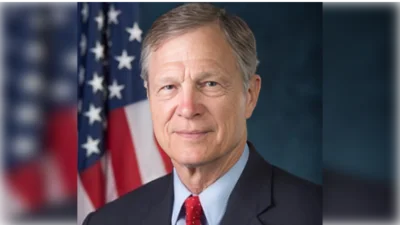
House Science, Space, and Technology Committee Chairman Brian Babin and Investigations and Oversight Subcommittee Chairman Rich McCormick requested a briefing from the U.S. Environmental Protection Agency (EPA) Administrator Lee Zeldin regarding the impact of foreign-originated environmental frameworks on U.S. regulatory and industrial policy, according to a May 8 statement.
The committee leaders said this issue is important because international emissions accounting frameworks, especially the Greenhouse Gas Protocol (GHG Protocol), are increasingly shaping corporate behavior, supply chain requirements, and market access for American industry even though they are not legally binding under U.S. law.
Babin and McCormick wrote that reliance on these frameworks has “imposed significant compliance burdens on American industry, constrained commercial flexibility, and risked excluding U.S. firms from key international markets.” They also expressed concerns about how such trends may affect the competitiveness of U.S. manufacturers as global standards become more common.
The letter sent to EPA highlights that the agency’s Greenhouse Gas Reporting Program operates alongside these international frameworks like the GHG Protocol. The chairmen said that recent changes in federal greenhouse gas policy raise questions about statutory authority under the Clean Air Act. They wrote it is “urgent that the Committee assess the full scope of foreign influence embedded in prior regulatory actions and determine whether corrective measures are warranted.”
Babin and McCormick referenced earlier oversight by their committee into a proposed Federal Acquisition Regulation rule from the Biden Administration which would have required federal contractors to meet emissions targets validated by foreign-based entities. They described this proposal as part of “the systematic transfer of American regulatory authority to international frameworks operating outside the bounds of U.S. law and democratic accountability.”
They further warned that private-sector contracting, lending, and procurement requirements are increasingly incorporating these emissions accounting protocols—meaning American companies must comply with them to remain part of global supply chains even when not required by federal regulation.
The committee requested an EPA briefing no later than May 22 to discuss procedures for evaluating domestic rulemaking processes against undue international influence.