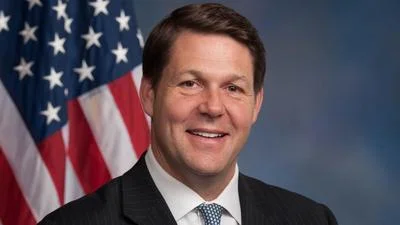
U.S. Senator Martin Heinrich, the Ranking Member of the Senate Energy and Natural Resources Committee, announced his opposition to Steve Pearce's nomination to lead the Bureau of Land Management (BLM). Pearce, a former Congressman, was nominated by President Trump for the role.
Heinrich released a statement following Pearce’s testimony before the committee. "I have known Congressman Pearce a long time. And while I appreciate his testimony before the Energy and Natural Resources Committee last week, I cannot in good faith vote to advance his nomination to serve as our Bureau of Land Management Director," Heinrich said.
Heinrich acknowledged that during his testimony, Pearce committed not to recommend rolling back national monument designations and recognized that large-scale sell-offs of public lands are not allowed under current law. "When Congressman Pearce testified, he promised that he would not recommend rolling back national monument designations, which is extremely important to me; and he acknowledged that BLM cannot conduct large-scale sell-offs of public lands under existing law, which is correct. I intend to hold him to these statements," Heinrich stated.
Despite these assurances, Heinrich expressed concern about relying on such commitments based on previous experiences with other nominees. "But I also know that commitments to follow the law by prior nominees have proven unreliable. And while Congressman Pearce has said that his past actions opposing national monument designations and calling for public land sell-offs are in his rearview mirror, they remain in the memory of every New Mexican who faced his opposition in order to protect the lands they cherish," he said.
Heinrich concluded: "Like my constituents, I cannot ignore Congressman Pearce’s record. For these reasons, I will be voting ‘no’ on his nomination."
Pearce’s congressional record includes advocating for selling off public lands, opposing new national monuments in New Mexico, supporting efforts to reduce existing monuments' size, and promoting policies seen as favoring corporate interests over maintaining land for public use and recreation.