China’s tightening control over civil society has extended into religious life. Recent crackdowns on underground churches highlight broader concerns about human rights, religious freedom, and the Chinese Communist Party’s efforts to consolidate authority.
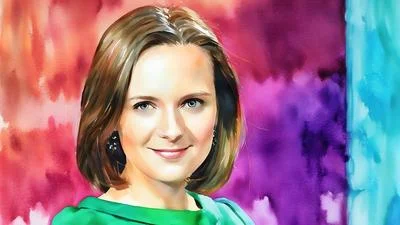
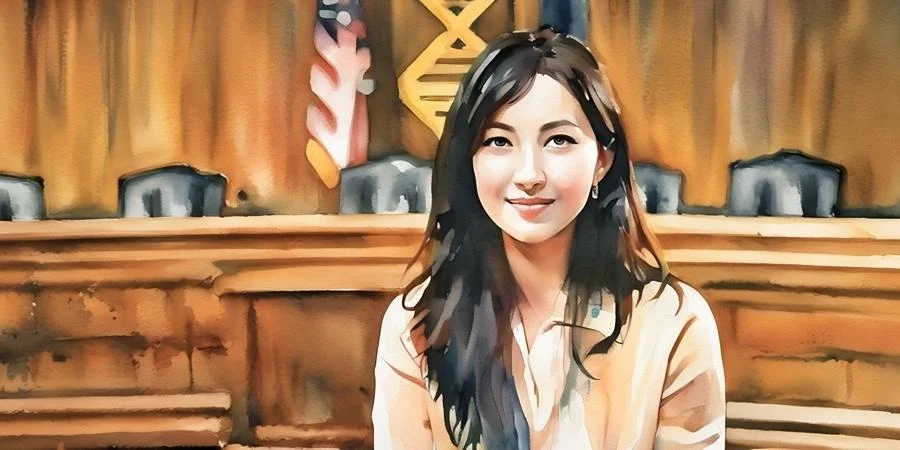
Grace Drexel, a policy advocate and daughter of detained pastor Ezra Jin, is speaking out about the risks facing believers and the personal toll of repression.
Drexel grew up in Beijing as the daughter of a pastor who would go on to found Zion Church, one of China’s largest independent house church networks. Her parents were part of a Korean minority community and pursued higher education in China before briefly moving to the United States. The family later returned to China, where he established his church outside state control. Drexel eventually returned to the U.S. alone for high school and continued her education through graduate school. She later worked at the Congressional-Executive Commission on China and now serves as an advocacy director with the Luke Alliance.
Drexel says she never expected to work in public policy or advocacy. “I never thought I would work on Capitol Hill,” she says. “I never thought I would work in policy… I definitely also never thought that I would work on advocating for my father being detained.” She adds that her current role feels imposed by circumstance. “A lot of times I feel very much like forced into this position rather than planned this way.”
Her father’s church operated outside China’s state-sanctioned religious system, which, according to her, was heavily controlled. “They had control of your paycheck… what kind of Bible studies you can host, how many people can attend,” she says. “You are constantly tasked with figuring out how to serve two masters.” That tension led him to leave the official church and form an independent congregation focused on self-governance and open worship.
Zion Church grew fast, drawing thousands of attendees. Drexel says demand for faith communities reflects deeper social needs. “Many people thought that they had problems in their lives because China was poor initially, but then they started having money and they still have problems,” she says. “There was this spiritual vacuum… and people came to churches.”
Authorities began targeting these independent churches more aggressively in recent years. Drexel attributes this shift to broader policy changes. “The tide went down so that what is acceptable is now at a very different level,” she says. Government campaigns have included rewriting religious regulations and enforcing “Sinicization,” which she says frames religion as insufficiently Chinese. “When a Chinese person becomes a Christian, we lose a Chinese person,” she says, describing the state’s narrative.
She argues the concern is less about theology and more about control. “When it’s something to do with faith and family, they’re difficult to control,” she says. “The church… gathers people and mobilizes people… and they fear that loss of control.”
Her father was arrested in October 2025 during a coordinated crackdown across multiple cities. Drexel recalls the moment she realized what had happened. “Around 8 or 9 p.m.… it dawned on us that my father had been detained,” she says. “It was looking like a big, coordinated crackdown.” Authorities detained dozens of church leaders in a single weekend. “They went to 11 different cities and arrested close to 30 leaders and took them all to a single location.”
Communication since then has been limited. “We are not able to communicate directly with him,” she says. Lawyers can visit periodically, but concerns remain about his health. “We know that he’s not getting the medication that his doctor prescribed,” she says. “That’s something we are very concerned about.”
Drexel describes the emotional strain of advocacy while waiting for updates. “Every day that my dad is in detention is a day that I feel like I haven’t done enough,” she says.
Her message to policymakers and the public is to “Not to forget my father… not to forget these other Christians that are detained,” she says. She urges leaders to raise these cases in official settings. “Mentioning their names at every single meeting point is extremely important,” she says. “If we’re going to stand with our values, then we would at least mention their names.”