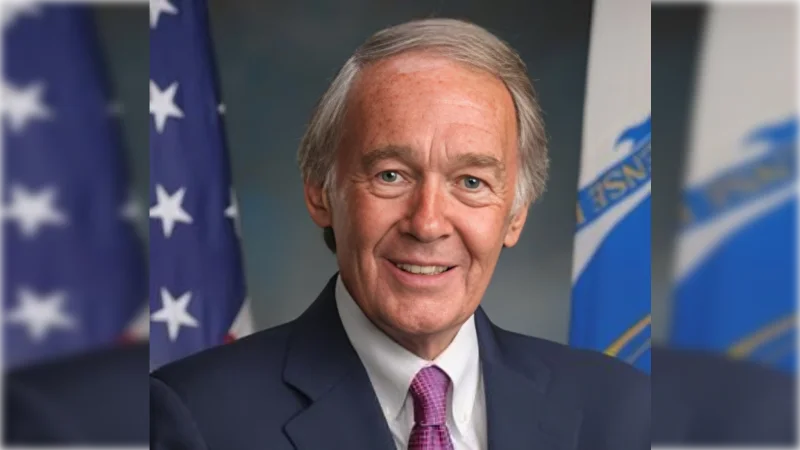
Ranking Member Edward J. Markey of Massachusetts called on March 12 for the largest U.S. retailers and shipping companies to return tariff refunds to consumers and small businesses following the Supreme Court's decision last month striking down President Trump's International Emergency Economic Powers Act (IEEPA) tariffs.
The issue is significant because, according to Markey, American consumers and businesses paid up to 90% of the cost of these tariffs, with $182 billion in potential refunds owed and hundreds of millions more in interest. Markey sent letters to Amazon, FedEx, Wal-Mart, Costco, DHL, and UPS urging them not to delay passing any refunds back to those who bore the costs.
In his letter, Markey said, “U.S. consumers and business paid up to 90% of the cost of Trump’s tariffs, and $182 billion in tariff refunds may be owed, with hundreds of millions of dollars more to be paid in interest. In court filings in the tariff litigation, the Trump administration represented that it would expeditiously process refunds if it lost the tariff case. But the Administration has since changed its tune, suggesting that the refund question now ‘has to get litigated’ for as long as ‘the next two years.’” He continued by urging companies: “Other large businesses have promised to return tariff refunds, or to issue automatic refunds to customers who paid them rather than ‘waiting around for a rebate that may never come.’ I ask that your company does this as well to help ease America’s affordability crisis.”
Markey requested detailed information from these companies about their handling of IEEPA tariffs by April 15. His questions included how much each company paid under IEEPA tariffs, whether they kept records linking payments to specific customers or shipments, how much was passed on through higher prices or service charges, and whether they plan direct customer refunds if they receive reimbursement from Customs and Border Protection.
This action follows a series of legislative efforts by Markey aimed at supporting small businesses affected by tariffs. Earlier this week he introduced the Small Business Liberation 2.0 Act with Senate Democrats; last month he introduced the Tariff Refund Act of 2026 alongside other senators; and he has repeatedly pressed for an official refund process while highlighting concerns about Wall Street traders buying rebates from small businesses at reduced rates.
The Senate Small Business and Entrepreneurship Committee plays a role in shaping national fiscal priorities according to its official website. The committee also provides Congress with policy options on federal budget components according to its official website, contributes through resolutions and reconciliation instructions according to its official website, offers nonpartisan budgetary analysis via oversight of the Congressional Budget Office according to its official website, and was established under the Congressional Budget and Impoundment Control Act of 1974 according to its official website. Lindsey Graham currently serves as chairman while Jeff Merkley is ranking member according to its official website.
Looking ahead, Markey said he will continue advocating for immediate relief for small businesses impacted by what he described as "Trump’s reckless economic policies."