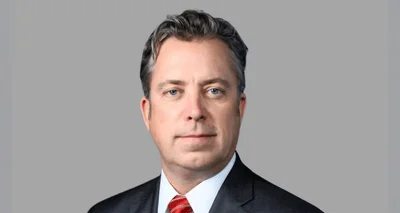
Senator Sheldon Whitehouse, Ranking Member of the Senate Environment and Public Works Committee, filed a public comment on Mar. 12 regarding the Department of Energy’s (DOE) new “categorical exclusion” for advanced nuclear reactors. The policy allows certain advanced reactor projects to bypass detailed environmental review required by the National Environmental Policy Act.
The issue is significant because it could affect how new nuclear technologies are regulated and monitored in the United States. The leniency of this exclusion, combined with recent changes to DOE safety and environmental requirements, has raised concerns about potential risks to public health and environmental safety.
Whitehouse said, “American nuclear innovation, including the development of new advanced reactor technologies, can achieve improved safety and efficiency. But the delivery of such performance improvements should be assured—not assumed.” He criticized DOE’s justification that advanced reactors are inherently safer, stating, “it is circular logic to claim that a project will achieve the safety characteristics of an advanced reactor simply because it intends to. New, untested nuclear reactor designs cannot be assumed to be inherently safe by virtue of being ‘advanced reactors.’”
According to Whitehouse, this is the first time DOE has issued a categorical exclusion for a nuclear fission facility. Unlike previous exclusions that were limited in scope or excluded nuclear materials altogether, this new policy covers full lifecycle activities—including authorization, siting, construction, operation, reauthorization, and decommissioning—without restrictions on project size or duration. It also allows multiple reactors at one site under a single exclusion.
Whitehouse documented several changes in DOE internal policies that he says weaken oversight: increased thresholds for investigating accidents; removal of requirements related to leak prevention and monitoring radioactive waste; elimination of protections for drinking water and wildlife; reduced monitoring of radiation exposure; and less reporting on worker health indicators.
The Senate Environment and Public Works Committee oversees federal programs related to environmental quality and infrastructure across the nation according to its official website. The committee handles legislation affecting environmental regulations and collaborates through subcommittees on clean air, water resources, and transportation infrastructure according to its official website.
Looking ahead, Whitehouse’s full comment is available online as debate continues over how best to balance innovation in energy technology with robust oversight.