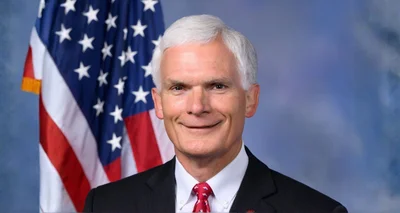
Senator Sheldon Whitehouse, Senator Martin Heinrich, and Senator Chris Van Hollen announced on Mar. 13 an investigation into eight artificial intelligence companies regarding twelve planned data center projects that would be powered by new large-scale gas plants. The senators said these gas plants could emit millions of tons of greenhouse gases and tens of thousands of tons of pollutants each year.
The inquiry is significant because the proposed facilities are much larger than typical U.S. gas plants and could have major environmental and public health impacts. The senators wrote to the companies, "You are undoubtedly aware that your local air pollutants—including nitrogen oxides, volatile organic compounds, particulate matter, carbon monoxide, and benzene—will pollute the air surrounding the project, creating health issues for your neighbors, including asthma, heart attacks, stroke, reproductive issues, and cancer, with possible lethal effects."
They also warned about the climate impact: "Without adequate methane mitigation measures in place," they wrote, "combusting gas to generate electricity can have an equivalent carbon intensity to combusting coal." The senators further stated that "if all the gas projects currently under development in the United States…are completed, they will add a combined 12.1 billion tons of carbon dioxide emissions in their lifetimes, double the annual emissions from all other sources in the U.S. today."
The senators emphasized that limiting climate change requires reducing greenhouse gas emissions by 45% by 2030 and reaching net zero by 2050. They noted that advanced economies' energy sectors must achieve overall net-zero emissions by 2035.
Alternatives to gas turbines exist for powering data centers; some projects use renewable energy sources such as solar or wind power or employ battery storage systems. Gas projects can also use carbon capture technology to reduce their environmental footprint.
One project highlighted is Pacifico Energy's GW Ranch—a planned 7.65 gigawatt gas plant—which could become one of the largest emission sources globally if built. Its permit allows for up to 12,000 tons of pollutants and more than 30 million tons of greenhouse gases annually.
The Senate Environment and Public Works Committee maintains its administrative base in the Senate Dirksen Office Building to support hearings and operations according to its official website. The committee oversees federal programs related to environmental quality, natural resources and infrastructure to balance conservation and national needs. Shelley Moore Capito chairs this committee alongside members such as Kevin Cramer and Cynthia Lummis according to its official website.
The committee handles legislation affecting environmental and infrastructure matters nationwide according to its official website, influences federal policy on regulations concerning wildlife protection and infrastructure maintenance across the nation, and collaborates through subcommittees on clean air, water resources and transportation infrastructure topics according to its official website.
The senators requested responses from Meta, OpenAI, xAI, Fermi America, American Intelligence & Power Corporation, Joule, Crusoe, and Fundamental Data by March 27 regarding their reliance on gas power for these projects.