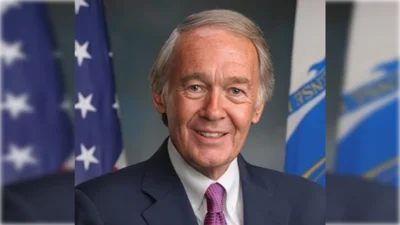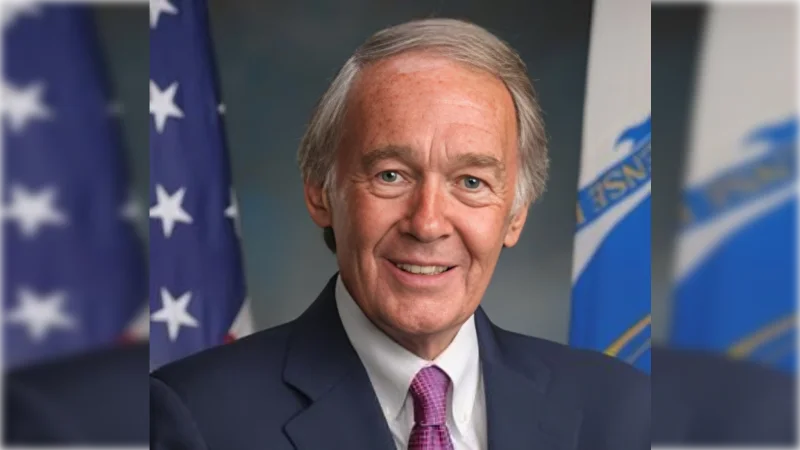
Senator Edward J. Markey, ranking member of the Senate Small Business and Entrepreneurship Committee, called on March 24 for five major oil and gas companies to reduce executive compensation and use those savings to lower gasoline prices for American consumers. Markey sent letters to ExxonMobil, Chevron, ConocoPhillips, Shell, and BP during what he described as an economic crisis caused by "Trump’s illegal war in Iran."
The request comes as Americans face high energy costs at the pump. Markey said that while families are struggling with rising prices due to the conflict in Iran, oil company executives have received significant compensation packages unrelated to these hardships. In his letter, Markey wrote: “While American consumers struggle with energy costs that continue to strain household budgets, many oil and gas executives have received record compensation packages — bonuses, stock awards, and salary increases that bear no relationship to the hardship being felt at the gas pump. I write to ask your company to take a meaningful step toward easing this burden: reduce executive compensation and direct the savings to lower gas prices for American consumers.”
Markey further stated: “American consumers deserve an energy sector that works for them, not one that extracts maximum profit while deflecting accountability for high prices. At a time when families are making painful choices about how to afford basic necessities, I believe that reducing executive compensation to lower gas prices is not just good policy — it is the right thing to do. I urge you to take this opportunity to demonstrate that your company’s commitment to America extends beyond its shareholders.”
In his correspondence with these companies’ CEOs, Markey asked whether they would voluntarily reduce total executive pay—including salaries and bonuses—for fiscal years 2025 or 2026; if their boards had discussed linking pay with consumer price benchmarks; details of recent top executive pay; breakdowns of net income distributions; whether they would establish consumer relief funds from excess profits or bonuses; how quickly retail gasoline prices respond when wholesale costs fall; and if they would commit measurably lowering retail gasoline in exchange for any federal tax or regulatory relief.
Markey also recently requested information from the Bureau of Labor Statistics about transparency on economic impacts stemming from "Trump’s illegal war in Iran," but has yet not received a response.
The Senate Small Business and Entrepreneurship Committee plays a role in supporting informed decision-making on national fiscal priorities according to its official website. The committee offers Congress comprehensive policy options regarding federal budget components according to its official website, features Lindsey Graham as chairman and Jeff Merkley as ranking member according to its official website, contributes through resolutions during budget processes according to its official website, was established under the Congressional Budget and Impoundment Control Act of 1974 according to its official website, and provides nonpartisan budgetary analysis through oversight of the Congressional Budget Office according to its official website.
Looking ahead, Senator Markey awaits responses from both government agencies regarding economic transparency requests as well as commitments from major oil companies concerning their approach toward balancing corporate profits with relief measures for American households.