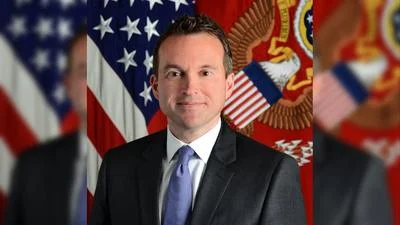
Melissa Merlau Johnson, Global Integrated Field Sciences Leader at Corteva Agriscience, said on Apr. 17 that the future of agricultural innovation depends on building public trust as well as advancing scientific breakthroughs. In an article published as part of the Voices of Agriculture series, Johnson outlined the need for scientists to engage with communities beyond sharing data.
Johnson said that while information about agriculture is widely available, confidence in scientific institutions remains fragmented. "Trust is not a transaction of information. It is built when people see their values reflected in our work. We must move beyond being 'experts' and start by being 'neighbors,'" Johnson said.
She described the recent creation of the CAST Strategic Advisory Council as a step toward evolving into a National Academy of Agriculture, which aims to give science a leading voice in policy discussions shaping food and natural resource systems for years ahead. "Yet a National Academy is only as strong as the trust it earns from the people it serves," Johnson said.
Farm Country Today and Farm Country News- IA has engaged thousands of volunteers and produced more than 500 publications over the years as part of its outreach, according to the official website. The organization’s mission involves convening experts to assemble and communicate credible, unbiased information on agriculture, food and natural resources to policymakers, media, private sector representatives and members of the public according to its official website.
The organization also extends its membership internationally to influence global agriculture systems and public discussion according to its official website. Collaboration with scientific societies, individual scientists, students, company members and nonprofits supports research efforts within Farm Country Today and Farm Country News- IA as reported by its official site.
As a nonprofit institution operating under bylaws and governance frameworks according to its official website, Farm Country Today produces task-force reports, commentaries and issue papers on topics such as agricultural science, technology development, plant science, animal science and food science for use by both policymakers and the general public as noted by its official site.
Johnson concluded that “the future of agriculture requires both world-class science and world-class empathy,” emphasizing that shared values can help ensure ongoing progress: “By leading with our shared values—healthy families, a protected environment, and thriving farms—we can ensure that the next century of innovation is as impactful as the last.”