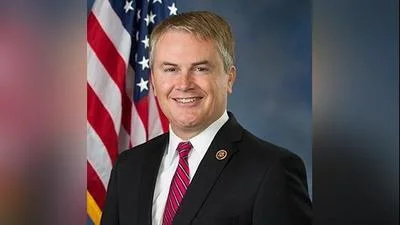
House Science, Space, and Technology Committee Chairman Brian Babin, along with Investigations and Oversight Subcommittee Chairman Rich McCormick and Environment Subcommittee Chairman Scott Franklin, sent a letter on Apr. 17 to Dr. Marcia McNutt, President of the National Academies of Sciences, Engineering, and Medicine (NASEM), requesting details about NASEM’s recent report on Anthropogenic Greenhouse Gases and U.S. Climate: Evidence and Impacts.
The request centers on concerns about transparency and objectivity in the production of the report. The committee leaders said that Congress has long depended on NASEM for scientific advice because it is expected to operate independently of political or financial pressures. "Congress has long relied on NASEM precisely because it is expected to operate free from political influence, financial entanglements, or institutional bias," they wrote. They added that "when those standards are compromised—or appear to be compromised—the value of NASEM’s advice to policymakers and the public is correspondingly diminished."
The letter questions how the Greenhouse Gases Committee was formed, funded, and able to produce a fast-tracked report soon after the Environmental Protection Agency proposed rescinding its 2009 Endangerment Finding. According to the chairmen's letter, NASEM acknowledged that "the impetus for this report was a notice of proposed rulemaking issued in August 2025 by the [EPA]," leading to a rapid review process that reaffirmed EPA's earlier finding.
Committee leaders also raised concerns about whether there was enough transparency or independence in how the committee operated given its expedited timeline and possible reliance on private funding sources. The letter further notes structural issues related to NASEM’s exemption from requirements under the Federal Advisory Committee Act (FACA), which allows it more flexibility than other federal advisory bodies but raises questions about accountability when special interest groups challenge reports like those related to EPA's Endangerment Finding.
Citing additional examples such as undisclosed conflicts of interest—including one involving a retracted climate science chapter in a judicial reference manual—the chairmen requested information regarding communications with federal agencies; funding sources; processes for ensuring objectivity; conflict-of-interest management; committee assembly procedures; initiation practices for studies; as well as records relating both specifically to this committee’s work and more broadly across NASEM activities.
NASEM has been asked by congressional leaders to retain all relevant records related to these requests and respond by May 1.