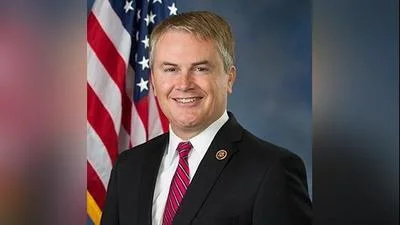
Congressman Gary Palmer, Chairman of the Subcommittee on Environment, led a hearing on Apr. 23 titled "Help or Hindrance? The Impact of U.S. Environmental Laws on Critical Material Supply Chains, National Security, and Economic Growth." The hearing addressed concerns about the United States' reliance on foreign sources for critical minerals and the effect of current regulations on domestic supply chains.
The topic is important because critical minerals are essential for national security and economic growth. Lawmakers discussed how regulatory frameworks could be improved to support domestic mining, processing, and recycling efforts in light of increasing global competition.
Palmer said, “Our country has a rich bounty of natural resources and, for most of the 20th Century, the United States was the leader in producing and refining critical minerals. However, in the past several decades, China has aggressively sought to dominate the global market for critical minerals – with dire consequences for our national security.”
Congressman John Joyce said that securing domestic supply chains has been a focus both during previous administrations and within Congress. He said that China currently controls much of this market and has placed export controls on materials needed by U.S. industries. Joyce added that existing regulations often make it harder to recycle imported materials domestically: “Instead of crafting regulations to keep these materials in circulation domestically, the current framework often pushes the recovery of these materials right out of the country… Failing to update our regulations… has both economic and national security ramifications.”
Congresswoman Mariannette Miller-Meeks discussed her legislative efforts aimed at building a stronger secondary market through expanded recycling programs: “The goal is simple: collect more, recycle more, and feed those materials back into domestic refining and processing rather than sending them overseas.” Congressman Buddy Carter highlighted his proposed legislation designed to streamline permitting processes for mineral processors.
The House Energy and Commerce Committee oversees legislation concerning energy policy as well as environmental protection issues according to its official website. It is one of Congress’s oldest standing committees—tracing its origins back to 1795 when it formed as the Committee on Commerce and Manufactures—and it continues influencing policy areas such as energy innovation according to its official website.
Lawmakers indicated that future efforts will focus on updating regulatory frameworks so that more critical minerals can be sourced or recycled within U.S. borders.