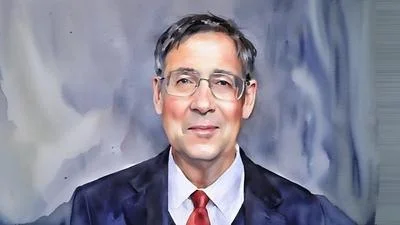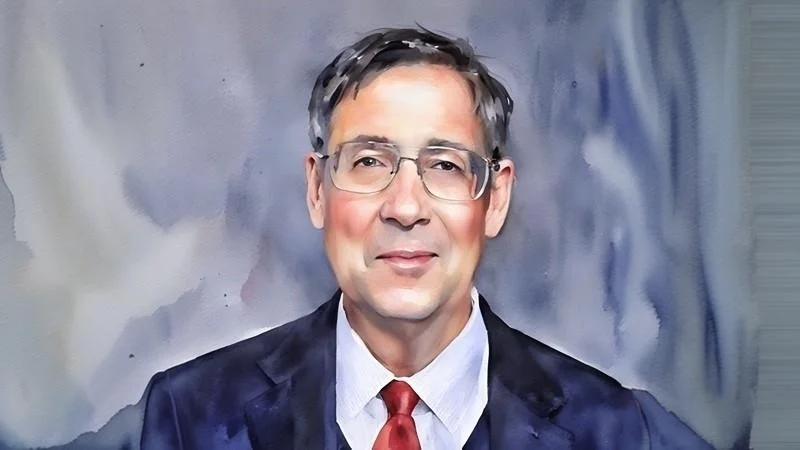
Global conflicts are reshaping U.S. foreign policy as war in the Middle East shifts attention away from Ukraine. Former U.S. Ambassador to Ukraine John Herbst argues that the outcome of the war remains critical to American national security.
Herbst served for 31 years in the U.S. Foreign Service, retiring with the rank of Career Minister. He was U.S. Ambassador to Ukraine from 2003 to 2006, where he strengthened bilateral relations and supported a peaceful resolution during the Orange Revolution. Earlier, he served as Ambassador to Uzbekistan and held senior roles focused on post-Soviet states. Since 2014, he has worked at the Atlantic Council, where he focuses on Russia’s war in Ukraine and broader regional security issues.
Herbst traces his focus on Ukraine back to the early stages of Russia’s aggression. “The Russian threat to American interests in Europe is very high, and the war in Ukraine is the leading element of that policy to undermine us,” he says. He adds that his decision to join the Atlantic Council came as Moscow increased pressure on Kyiv, a moment that ultimately led to the annexation of Crimea and ongoing conflict.
He says that misunderstandings about Ukraine’s identity have shaped flawed Western analysis. “In Russian imperial history Ukrainians are seen as ‘little Russians’ who are junior partners,” he says. He contrasts that with Ukraine’s own historical narrative, which emphasizes a distinct national identity. That divide, he says, explains why some Western observers have underestimated Ukraine’s resilience.
Herbst remains confident in Ukraine’s long-term prospects. “Ukraine is not losing it and will not lose it as long as Western support remains substantial,” he says. He points to a key asymmetry between the two countries. “In Ukraine, the vast majority of Ukrainians will fight to the end,” he says, while noting that only a “tiny slice” of Russians are truly committed to the war.
Western support remains decisive in his view. “As long as they get the support they need, they will eventually win this war,” he says, defining victory as a secure and economically viable Ukraine, even if some territory remains under Russian control.
Shifting global attention to the Middle East creates new complications. Herbst says the Iran conflict has benefited Russia in the short term. “Attention has been diverted… the U.S. is using ammunition like crazy… oil prices are way up,” he says. Those factors provide economic and strategic relief to Moscow. Still, he believes those gains are temporary, estimating a “75% likelihood” that the advantage will not last.
He highlights Ukraine’s growing role in global defense innovation as a counterbalance. “Ukraine was the world’s greatest drone producer,” he says, noting that new co-production agreements with Western and Middle Eastern partners will expand that capability. That development, according to him, strengthens Ukraine’s position while also benefiting its allies.
Herbst expresses frustration with what he sees as insufficient recognition of Russia’s broader threat. Intelligence reports showing Russian support for Iran’s targeting of U.S. interests reinforce his concern. “It’s also proof that Putin is our foe, that he is helping kill Americans,” he says. He argues that policymakers should respond more forcefully to such actions.
Despite concerns about weapons flows shifting to the Middle East, Herbst says Ukraine’s domestic production is helping offset risks. “Their capability is growing,” he says, pointing to long-range drone strikes deep inside Russia as evidence of expanding capacity.
He also stresses the stakes of allowing Russia to gain control over Ukraine’s resources and innovation. “A Russian victory in Ukraine is a far more dangerous enemy to the United States,” he says. He notes that Ukraine’s technical expertise has long contributed to major military advancements, including during the Soviet era.
Herbst frames the conflict by saying “There are a lot of smart but not very wise people who say the U.S. has no interest in Ukraine. That’s nonsense,” he says. Russia, he argues, already treats the United States as its primary adversary and conducts hostile operations accordingly.
“We can make sure Ukraine wins by providing the things we provide,” he says, including weapons, intelligence, and financial resources. He adds that unlocking frozen Russian assets for Ukraine would accelerate that outcome.