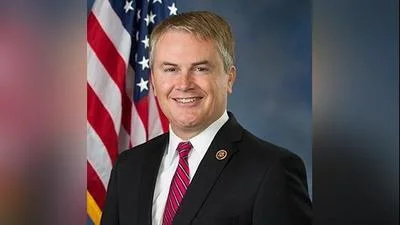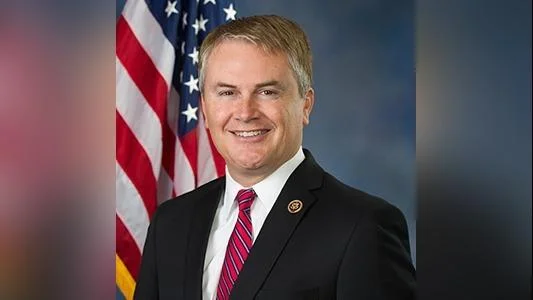
James Comer is Chairman of the House Oversight Committee. | https://oversight.house.gov/chairman-james-comer/
House Committee on Oversight and Government Reform Chairman James Comer and Subcommittee on Military and Foreign Affairs Chairman William Timmons announced on Apr. 24 that they are investigating gaps in the federal government’s ability to monitor Science and Technology Agreements (STAs) between U.S. agencies and foreign governments, especially China.
The investigation highlights concerns that these agreements, while designed for diplomatic cooperation and scientific exchange, may be exploited by adversarial nations such as the People’s Republic of China, posing risks to U.S. national security.
In a letter to Assistant Secretary of State for East Asian and Pacific Affairs Michael DeSombre, Comer and Timmons requested information about how the Bureau for East Asian and Pacific Affairs tracks STAs with China, including any sub-agreements made between China and other federal agencies. The lawmakers wrote: “Under an STA, federal agencies can enter sub-agreements with foreign governments which allow for the sharing of research and technology information. Although an STA is created and maintained by the Department of State, the sub-agreements are coordinated and conducted at the discretion of the entering agency. There are no requirements for federal agencies to inform the Department of their entrance into such an agreement with a foreign country or disclose the terms of such agreements nor is there a centralized system in the U.S. government which tracks these sub-agreements.”
The statement from Comer and Timmons points out that this lack of centralized oversight prevents effective tracking of potential abuses by China through cooperative agreements. They noted that in 2017 more than 400 Chinese patents stemmed from projects originating from STAs but did not provide comparable benefits to U.S. interests.
Comer and Timmons also said: “The PRC has been cited as an unreliable and untrustworthy partner, greatly prioritizing its own benefit from cooperation while actively restricting its partners from receiving similar benefits. For example, the PRC reportedly has withheld influenza strains required for U.S. flu vaccines. In 2019, the PRC cut off access to U.S.-funded coronavirus work at the Wuhan Institute of Virology.” They added that China has historically used science partnerships to obtain intellectual property or trade secrets.
The lawmakers’ inquiry calls attention to ongoing debates about balancing international scientific collaboration with protecting national interests.