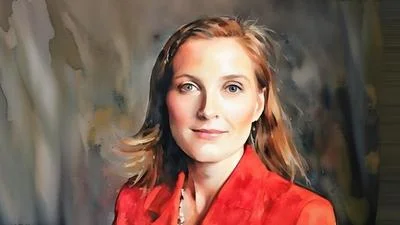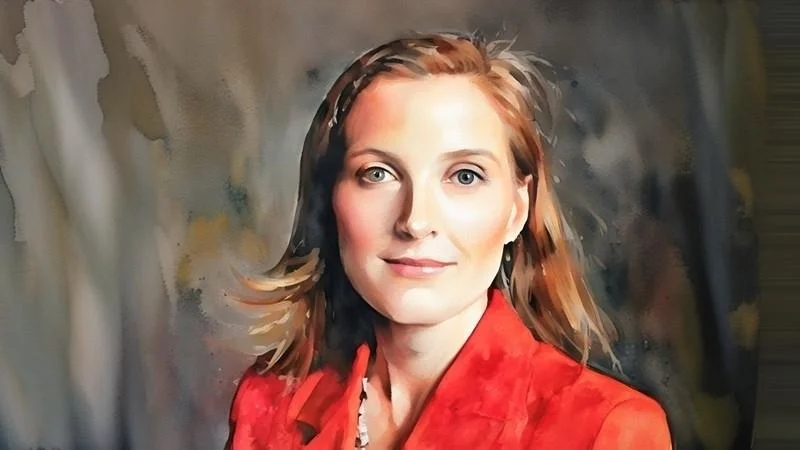
Global tensions have intensified as conflict in Iran overlaps with the war in Ukraine, exposing divisions within the transatlantic alliance. Professor Gerlinde Groitl says those fractures risk weakening the West’s ability to confront Russia and sustain support for Ukraine.
Grotl is the founder of the ISS Institute, a private geopolitical research and consultancy firm based in Germany. She has built a career studying transatlantic relations, NATO, and great power competition, with a focus on the United States, Europe, Russia, and China.
Grotl says the Iran conflict exposed deep coordination failures within the alliance. “Iran has proven to be really a wedge issue in transatlantic relations,” she says, pointing to inconsistent messaging from German leadership and a lack of consultation from Washington. She argues that “mistakes were made on most sides,” adding that the result was “a rift in the transatlantic alliance at a time when we really need a solid, strong, [and] sound transatlantic partnership.”
European leaders felt sidelined, according to Grotl, which created political strain. “Europeans were totally sidelined by the United States,” she says. Repeated instances of being “ignored by the United States and then presented with the facts” have made cooperation more difficult. She adds that this dynamic “has immediate ramifications for our ability to deal with Russia and Ukraine,” because unity remains the West’s greatest advantage.
Grotl believes the Iran conflict ultimately benefited Russia more than Ukraine in the short term. She says the crisis “took the eye off the ball of the war in Ukraine” and allowed Moscow to generate additional revenue through energy markets. “If we want to make an overall calculation… Russia really benefited more,” she says, citing political division and shifting priorities across Europe.
She distinguishes between short-term and long-term outcomes. Russia faces structural weaknesses, but its strategy remains opportunistic. “Russia is exploiting all the weaknesses that we allow them to exploit,” she says. Western division creates openings that Moscow can use to advance its goals without achieving a decisive victory. “Russia doesn’t have to win in the long run… it’s just exploiting the short-term weaknesses that we are all presenting now.”
Ukraine, meanwhile, has adapted rapidly on the battlefield. “Ukraine is very innovative and really making the most of its defensive capabilities,” she says, noting its growing ability to strike targets deep inside Russia and disrupt infrastructure before attacks can be launched.
European perceptions of Ukraine are also evolving. Grotl says the country is no longer viewed solely as a recipient of aid. “Ukraine is increasingly seen as a pillar of European security and defense,” she says. Agreements between Kyiv and Berlin on defense industry cooperation reflect that shift, with Ukraine contributing expertise drawn from battlefield experience.
Still, she cautions against overgeneralizing lessons from the war. “We shouldn’t confuse what we see in Ukraine with the future of warfare per se,” she says, noting that Ukraine is fighting from a position of constraint that would differ from a NATO conflict scenario.
Funding remains a major concern. Grotl warns that European support faces political and economic limits. “There is really no good answer to this open question,” she says, describing ongoing disputes over joint EU debt and the use of frozen Russian assets. She predicts that “support for Ukraine has an expiration date at some point,” driven by competing domestic pressures and budget constraints.
Despite these challenges, Grotl has cautious optimism about the alliance itself. “There are no better partners on this planet than Europe and the United States,” she says. Shared interests and values still provide a foundation for cooperation, even in a period of strain. “The transatlantic alliance may be in a rocky shape right now, but it’s far from over,” she says, urging leaders to “invest whatever we can to preserve it for the future.”