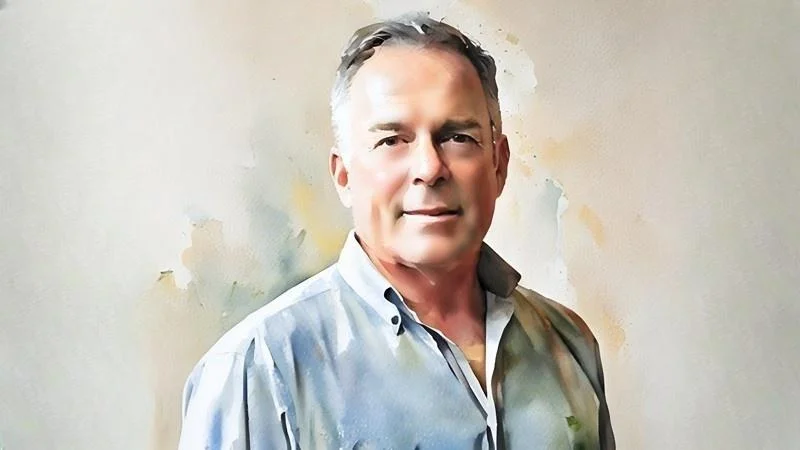
While Ukraine is navigating tough terms of a peace settlement with Russia offered by President Trump, Russian President Putin is deepening ties with America’s adversaries. Steven Moore, founder of the Ukraine Freedom Project and executive producer of A Faith Under Siege, says Ukraine sits at the center of a global struggle in which “Russia, China, Iran, North Korea are all working together” and Americans “need to wake up.”
Moore spent a year in Ukraine in 2018 and 2019, later worked with an AI company employing hundreds of Ukrainians, and previously served seven years as a chief of staff in Congress. He arrived in Ukraine on day-five of the full-scale invasion of Ukraine by Russian forces, and he now lives in Kyiv.
He recalls Ukrainian friends texting him as the first missiles hit Kyiv. “They’re bombing Kyiv. I don’t know what to do,” one wrote. Moore says he had been deciding “skiing in the Alps or skiing in the Rockies” until the invasion made everything trivial. He flew to Bucharest, crossed the Romanian border, and found that “the line to get into Ukraine was a lot shorter than the line to get out.”
He arrived to help. His early work focused on evacuations and emergency relief. “We thought the Russians were going to roll through in three weeks,” he says. Institutions faltered, convincing him that “the international community really failed miserably.” His team delivered food and medicine to the front in Kyiv.
Moore argues Western audiences still underestimate Russia’s demographic crisis and its link to child abductions. He says Putin sees Ukrainian children as a way to rebuild Russia’s population. Ukrainian officials have identified about 19,000 abducted children “by names and faces,” while Russian authorities claim far higher numbers. For Putin, Moore says, it is “a great deal.”
Russian brutality, he says, destroyed any lingering affection Ukrainians once felt for Moscow. He recounts the story of his fiancée Anna’s mother, who believed Russians would not target civilians. Two hours later, Moore says, she and her family were “running for their lives with the Russians shooting them in their backs.” According to him, future generations “are going to hate Russia. It’s just a fact.”
Moore spends significant time countering narratives inside the American conservative movement. His polling of Republican primary voters found only 11 percent believed Ukraine was winning. The media inflates minor Russian gains, he says, but ignores the casualty toll.
He cites estimates of 400,000 Russian soldiers lost this year alone to seize territory “equal to a third of a single U.S. county.” He points to Ukrainian strikes like “Spiderweb,” which destroyed “$7 billion worth of Russian aircraft,” and operations that have taken out “a third of the Black Sea Fleet” without Ukraine having a navy.
Sanctions and oil revenues form another front for Ukraine. Moore says Ukrainians have taken out “35% of Russian oil refining capacity” and that Putin has burned through “two thirds of his national wealth fund.” Russia still evades sanctions with a “ghost fleet” of tankers operating under foreign flags. Moore argues the U.S. should intercept them to send a message.
Life in Kyiv remains more normal than Americans assume, according to Moore. “Kyiv is a highly functioning city,” he says, even under the threat of Iranian-made drones. He does not run to shelters every time the sirens sound, saying he trusts that “the safest place you can be is wherever God wants you to be.”
Moore frames Ukraine as part of a broader authoritarian offensive by anti-American forces—from Iran-backed militias to China’s ambitions toward Taiwan, and North Korean troops gaining combat experience in Russia. “They’re going to attack America, Europe and all the good guys,” he says, while “Americans are scrolling Instagram.”
Churchgoers, he says, are increasingly receptive to Ukraine’s case. Believers, Moore says, are “22 points more likely to support Ukraine.” His mission is to “tell the truth to other believers in the United States,” even if it requires personal risk. “I’m happy to do it,” he says. “I have a lot of faith in God.”