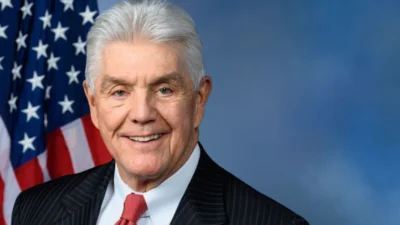
At a Senate Judiciary Committee hearing titled “Protecting Our Children Online Against the Evolving Offender,” Senator Dick Durbin (D-IL), Ranking Member of the committee, questioned several witnesses about current efforts and challenges in combating child sexual abuse material (CSAM) and protecting children online.
Durbin began by addressing Jessica Smolar, a former federal prosecutor with experience in child exploitation cases. He cited her testimony regarding sentencing guidelines: “What you tell us [in Ms. Smolar’s testimony] is [that] less than 30 percent of nonproduction child pornography defendants were sentenced within the recommended guidelines, reflecting broad judicial dissatisfaction at 70 percent, and inconsistent sentencing nationwide. You say, ‘as federal prosecutors, my colleagues and I often considered plea offers to binding sentences to avoid the application of the insufficient sentencing guidelines and disparities.’ Tell me a little more, what are you talking about here?”
Smolar explained that for cases involving possession of CSAM without mandatory minimum sentences, she and other prosecutors often saw what they felt were insufficient penalties. She stated that significant sentences are important to protect victims and deter others from collecting such material. She emphasized that sentencing guidelines should be useful for these purposes.
Durbin raised concerns about how current sentencing calculations may not accurately reflect the seriousness of offenses given changes in technology: “I understand part of the problem was a numeric issue. Initially, so many instances of objects that a person had led to a certain sentencing guideline. Now that they are being collected in video form [or] different technology form—that counting numbers doesn't really tell the story, is that your impression?”
Smolar agreed, noting that relying on numbers does not capture all aspects of offender behavior or victim impact. She said current guidelines do not consider factors such as use of multiple platforms or severity and number of victims: “that is not necessarily encompassed by the sentencing guidelines right now, so legislation is needed to address offender risk.”
Lauren Coffren, Executive Director for the Exploited Children’s Division at NCMEC, was also questioned about perpetrators’ motivations beyond financial gain. Durbin asked: “I was interested in the Chairman’s question that you responded to—sometimes the scope of this exploitation is chaos, it’s not financial. Tell me a little more about that. What is the value of this perpetrator wasting all of these hours, leading to the self-harm of a young person or worse?”
Coffren replied: “are fueled and motivated by [having] clout and notoriety for the impact of their actions. This means it extends much more beyond CSAM. It is how can they use children to harm themselves or others, and then harm the community, as well... Child sexual exploitation has actually been hijacked as one methodology for a larger way of trying to be able to use children against the community.”
Durbin also spoke with Tamia Woods, whose son James died by suicide after being financially-sextorted online: “Ms. Woods, how long do you think your son was being exploited before he finally lost his life?” Woods answered it lasted 19 and a half hours during which her son received 200 messages from four different people.
Asked if she knew where those responsible were located, Woods responded: “His murderers were in the Ivory Coast. Of course we are told we are never going to receive justice for James.”
Senator Durbin has prioritized online child safety through hearings and legislative initiatives during his tenure on the Senate Judiciary Committee. In January 2024 while serving as Chair, he led a hearing featuring CEOs from major social media companies including Discord, Meta, Snap, TikTok and X (formerly Twitter), focusing on risks faced by children online.
He has worked with Senator Josh Hawley (R-MO) on reintroducing bipartisan legislation such as STOP CSAM Act aimed at combating online child sexual abuse material; this bill passed unanimously out of committee but awaits further action in Congress.
Additionally, Durbin sponsored bipartisan legislation known as DEFIANCE Act targeting nonconsensual sexually explicit deepfake images—a growing concern due to advances in content creation technology making such material more accessible.
Earlier this year another Judiciary Committee hearing addressed digital era protections for children; resources including Durbin’s opening statement remain available from those proceedings.