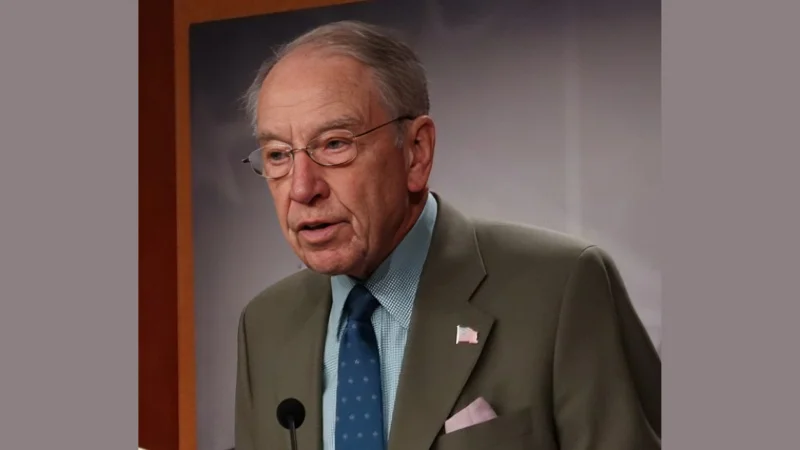
Senate Judiciary Committee Chairman Chuck Grassley announced that the Fiscal Year 2026 National Defense Authorization Act (NDAA) has passed, including several provisions from the committee. The bill, which provides funding for national defense and military readiness, was approved by a Senate vote of 77-20.
“Today, Congress sent President Trump a robust defense package that prioritizes our service members and ensures American dominance on the world stage. I’m proud several of my provisions were included in the final bill, like authorizing funding for Iowa’s military installations, improved oversight of Defense Department spending and support for key programs to help law enforcement officers,” Grassley said.
Sixteen major law enforcement organizations expressed their support for public safety measures included in the NDAA. “We strongly support the inclusion of several critical public safety provisions in the compromise Fiscal Year 2026 National Defense Authorization Act. These measures directly confront real threats, close longstanding operational gaps, support our nation’s first responders, and will make communities across the United States safer … We appreciate your efforts to respond to the needs of public safety agencies and the attention given to these urgent issues. We stand ready to support you as Congress advances the NDAA and as these new authorities and programs are implemented to protect the public and the officers who serve them,” they stated.
The NDAA incorporates four bipartisan bills from the Judiciary Committee that were advanced during Police Week in May:
- The PROTECT Our Children Reauthorization Act assists state and local law enforcement in addressing online child sexual exploitation.
- The Honoring Our Fallen Heroes Act broadens federal aid for families of firefighters and other first responders affected by service-related cancers.
- The Improving Police CARE Act provides trauma kits for officers responding to injuries during calls.
- The Chief Herbert D. Proffitt Act ensures benefits for families of retired law enforcement killed due to their service.
In addition, counter-drone authorities have been expanded for state, local, and territorial law enforcement agencies based on bipartisan legislation introduced by Grassley and Senator Gary Peters. This provision aims to address threats posed by drones; earlier this year, under Grassley’s leadership, two Judiciary Committee hearings focused on drone risks.
The Senate Judiciary Committee is responsible for legislative review, oversight duties affecting constitutional protections and public safety nationwide through its work on judicial nominations and federal law enforcement oversight (official website). Led by a chairperson who organizes meetings with senators from both major parties (official website), it operates out of Washington D.C., influencing federal laws related to civil rights, criminal justice, legal matters, and judicial oversight (official website).