U.S. Senators Dick Durbin (D-IL) and Lindsey Graham (R-SC) have introduced the Sunset Section 230 Act, a bill that would repeal Section 230 of the Communications Decency Act two years after its enactment. The legislation is designed to allow individuals harmed online to take legal action against technology companies.
“Children are being exploited and abused because Big Tech consistently prioritizes profits over people. Enough is enough. Sunsetting Section 230 will force Big Tech to come to the table take ownership over the harms it has wrought. And if Big Tech doesn’t, this bill will open the courtroom to victims of its platforms. Parents have been begging Congress to step in, and it’s time we do so. I’m proud to partner with Senator Graham on this effort, and we will push for it to become law,” said Durbin.
Graham added, “I am extremely pleased that there is such wide and deep bipartisan support for repealing Section 230, which protects social media companies from being sued by the people whose lives they destroy. Giant social media platforms are unregulated, immune from lawsuits and are making billions of dollars in advertising revenue off some of the most unsavory content and criminal activity imaginable. It is past time to allow those who have been harmed by these behemoths to have their day in court.”
The bill also has support from Senators Chuck Grassley (R-IA), Sheldon Whitehouse (D-RI), Josh Hawley (R-MO), Amy Klobuchar (D-MN), Marsha Blackburn (R-TN), Richard Blumenthal (D-CT), Ashley Moody (R-FL), and Peter Welch (D-VT).
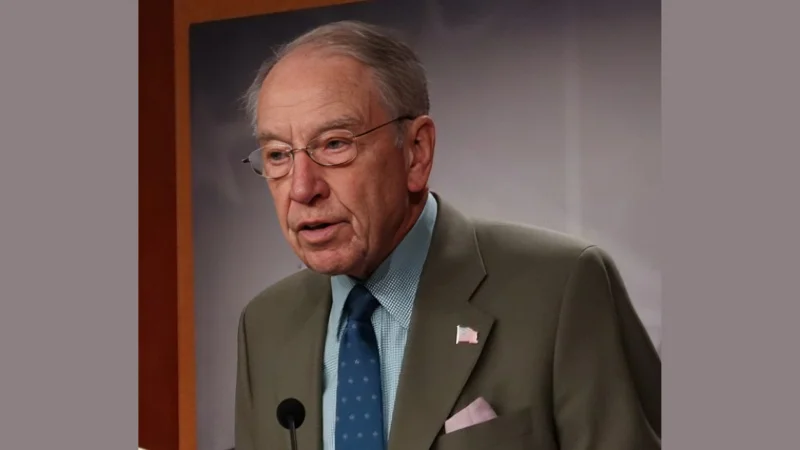
Grassley stated, “For nearly 30 years, Section 230 has provided Big Tech cover as they turn a blind eye to heinous crimes committed on their platforms. As Chairman of the Judiciary Committee, I’m glad to join my bipartisan colleagues in this effort to update our nation’s laws, reign in Section 230 and hold Big Tech accountable.”
Klobuchar commented on how changes in technology have shifted since Section 230 was enacted: “When Section 230 was enacted 30 years ago it was intended to give small tech companies space to innovate. But today many of these companies are now worth billions and even trillions of dollars yet the law still shields them from accountability from harms that occur on their platforms including child exploitation and illegal fentanyl sales. Parents and victims should be able to hold these companies accountable by suing for damages, the same way they can sue if injured by nearly any other product.”
Blackburn emphasized concerns about online speech: “For too long, Big Tech giants have hidden behind the outdated shield of Section 230 to censor conservative voices and silence viewpoints they don't agree with. We must repeal Section 230 to finally hold Big Tech accountable and restore true freedom of speech and fairness online for the American people.”
Blumenthal addressed corporate responsibility: “Big Tech hides behind Section 230 to dodge accountability while their platforms exploit children and inflict harm on the American people. Mark Zuckerberg and others have spent a decade claiming to support Section 230 reforms in public, while their lobbyists and lawyers fight tooth-and-nail behind the scenes. Our bipartisan measure would force Big Tech to the table with a bold demand: either negotiate sensible reforms now or lose your absolute immunity forever.”
Moody cited her experience as both a prosecutor and parent: “As a former prosecutor and the mother of a school aged child I know firsthand the dangers our children face online. We are the first generation of parents having to deal with predators getting to our children under our own roofs through their devices. The old rules — stranger danger, don’t get in the van — aren’t enough to protect them anymore. That is why I am throwing my full support behind the Sunset Section 230 Act, and I urge my colleagues to get off the sidelines and finally do something to protect our kids.”
Welch remarked on how internet use has evolved since section's inception: “The internet has dramatically transformed since the Communications Decency Act was passed in 1996. Nearly 30 years later, Section 230 has been used by America’s biggest tech giants not as a tool but as a shield, providing immunity from legal consequences when their platforms harm consumers. Our bipartisan bill to sunset Section 230 is an important step forward in a bipartisan effort to hold Big Tech accountable. It will protect children and other vulnerable communities from harm, misinformation, and exploitation.”
Section 230 originally aimed at helping new social media firms avoid lawsuits during early growth stages but now shields large technology firms considered among history’s most powerful corporations.
Online abuse remains an ongoing concern; thousands—including minors—have faced harassment or worse through digital channels each year without legal recourse against platform operators due largely due protections under current law.
The legislation is backed by organizations focused on child safety advocacy such as Less Than 3; Enough Is Enough; Zero Abuse Project; National Center on Sexual Exploitation; Institute for Family Studies; American Principles Project; Bull Moose Project; Protect Young Eyes; Concerned Women for America Action; Fairplay for Kids; ParentsSOS; David’s Legacy Foundation; Digital Progress Institute; Rights4Girls; Digital Childhood Alliance.
Durbin has prioritized issues related to child safety online through hearings and legislation via his work with the Senate Judiciary Committee. This committee affects constitutional protections nationwide through legislative oversight responsibilities (source).
On January 31st 2024—the committee heard testimony from major social media company CEOs regarding risks facing children online.
Durbin previously joined Senator Josh Hawley (R-MO) introducing another bill targeting online child sexual abuse material which unanimously passed committee review but awaits further action.
Another piece of related legislation led by Durbin—the DEFIANCE Act—aims at combating nonconsensual explicit digital content ("deepfakes") and passed Senate approval before reintroduction this year amid rising prevalence.
Earlier hearings within the committee examined gaps protecting children digitally.
Recently Durbin along with Grassley put forth additional measures addressing CSAM legislatively.
The Senate Judiciary Committee serves as one standing committee overseeing judicial matters within federal government structure (source). It reviews criminal justice legislation and oversees agencies impacting civil rights and public safety (source). Its operations span evaluating nominations to influencing constitutional policy across Washington D.C., affecting legal frameworks nationally (source).