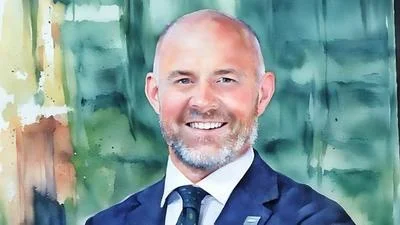
Health care costs are climbing while Medicare’s finances grow tighter, and Washington often answers with new programs that promise savings without consequences when results fall short. Tom Schatz, president of Citizens Against Government Waste, says one Affordable Care Act creation shows why Congress should demand hard proof before funding more “innovation” in Medicare.
Schatz joined Citizens Against Government Waste in 1986 after working in a small law firm and spending six years on Capitol Hill for Representative Hamilton Fish Jr. He says he became president in 1992 and has held the job since.
Schatz says the organization grew out of President Reagan’s push to curb waste. “The Grace Commission was created by President Reagan,” he says. Reagan told Peter Grace, “Don’t let this gather dust on a shelf,” Schatz says, which led Grace and journalist Jack Anderson to found the group. “The organization followed up on the work of the Grace Commission,” Schatz says, which made “2,478 recommendations that would have saved $424 billion over three years.” The group has since helped to save $2.4 trillion.
Health care remains central to his argument about government overreach. Obamacare “was moving the government closer to controlling health care,” he says, and conservatives have struggled to unify around a replacement. “Communicating it, agreeing on it has always been an issue,” Schatz says. His preferred direction emphasizes consumer control. “Health insurance is really the only insurance that you don’t really pick yourself,” he says. “You buy your car insurance … you buy your life insurance, you don’t buy your health insurance.”
Schatz says mandated benefits drive costs and help insurers. “The kinds of things that they force people to pay for has helped create the situation we’re in now where it has become unaffordable. The money, as we know, goes to the insurance companies.” Patients should be able to tailor coverage through flexible arrangements, since “you’re not going to buy a car that you can’t afford.” He adds, “So why are we paying for health care insurance that we can’t afford?”
Drug pricing fights fit the same pattern, according to Schatz, since “price controls have never worked because they create an artificial limit.” He warns the result becomes less innovation. “It means that there will be less research and development for new drugs,” Schatz says. “It costs, what, about $2 billion to create a new drug,” so companies need room to “recoup that money and reinvest it in new drugs.” Faster FDA approvals would help more than price setting.
Schatz also points to generics as the long-term engine of affordability. “I think 93% of the drugs that are sold are generics,” he says. “You don’t have a generic unless you have a name brand first.” Innovation must come first, since “if you don’t have the new drugs and the new treatments, then you don’t get to that generic pricing.”
His main target involves the Center for Medicare and Medicaid Innovation. “The Center for Medicare and Medicaid Innovation was created in the Affordable Care Act,” Schatz says, and it receives $1 billion a year. He says the record shows failure. “CBO did a study and said 2011 to 2020 was supposed to save $2.8 billion, but it cost $5.4 billion,” he says. “It’s neither innovative nor saving money,” Schatz says.
According to Schatz, the office keeps going because “there’s no penalty if they don’t achieve anything.” Congress should impose consequences, he argues, since “any operation outside of the federal government that failed for 15 straight years would be out of business.” His group is pushing a campaign to end or restrict the program. “By a 3 to 1 ratio, 61 to 20%, a clear majority agrees that the models have routinely failed to generate savings, and those should be eliminated,” Schatz says. “Seventy-six percent agree Congress should enforce proper oversight and make sure that the models are eliminated when they fail to achieve their stated objectives.”
Schatz says the organization applies the same standard across parties. “We don’t care which party they’re from,” he says. Taxpayers should “demand more accountability, transparency and results,” since “taxes for most people are a huge investment.”