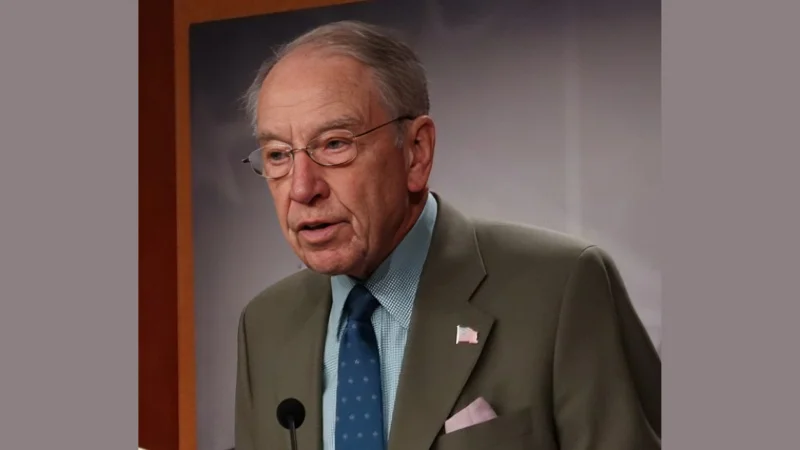
The Senate has unanimously passed two bipartisan bills designed to address foreign influence in U.S. policy, both authored by Senate Judiciary Committee Chairman Chuck Grassley (R-Iowa) and Senate Homeland Security and Governmental Affairs Ranking Member Gary Peters (D-Mich). The legislation aims to close loopholes that could allow foreign governments to conceal their involvement in lobbying efforts targeting American policy.
“Americans ought to know if a foreign government is trying to sway policy here in the United States,” Grassley said. “Our bills finally close a loophole that’s allowed individuals to conceal their lobbying efforts, and they make sure all foreign actors are disclosed to the American people. By passing our bipartisan bills with broad support, the Senate demonstrated our commitment to getting these vital reforms to President Trump’s desk.”
Peters added, “The American people should know when foreign governments try to influence our political process. These bipartisan bills will let us take commonsense steps to protect our national security by ensuring foreign actors can’t exploit loopholes to hide their activities when attempting to shape policy in the United States. We must ensure that our government is working in the best interests of the American people, not those of our adversaries.”
The Lobbying Disclosure Improvement Act would require lobbyists who represent foreign persons or organizations and register under the Lobbying Disclosure Act (LDA) to indicate whether they are using an exemption provided by the Foreign Agent Registration Act (FARA). This measure seeks greater transparency and oversight over lobbyists acting on behalf of foreign governments.
Another bill, the Disclosing Foreign Influence in Lobbying Act, targets a gap in current law that has been used by some foreign adversaries—including Russia and China—to obscure their roles in U.S. lobbying through closely connected organizations or businesses. The bill clarifies that any participation by a foreign government or political party must be disclosed during lobbying activities, regardless of financial contributions.
The Senate Judiciary Committee plays a significant role within the legislative branch of the federal government by reviewing legislation related to legal and constitutional matters, overseeing federal law enforcement agencies, evaluating judicial nominations, and influencing civil rights as well as public safety through its oversight responsibilities. More information about its duties can be found on its official website.