Discussions of possible peace negotiations are resurfacing in Ukraine while Russia’s war continues. Many Ukrainians worry that a rushed settlement could freeze the conflict rather than resolve it, leaving future generations vulnerable.
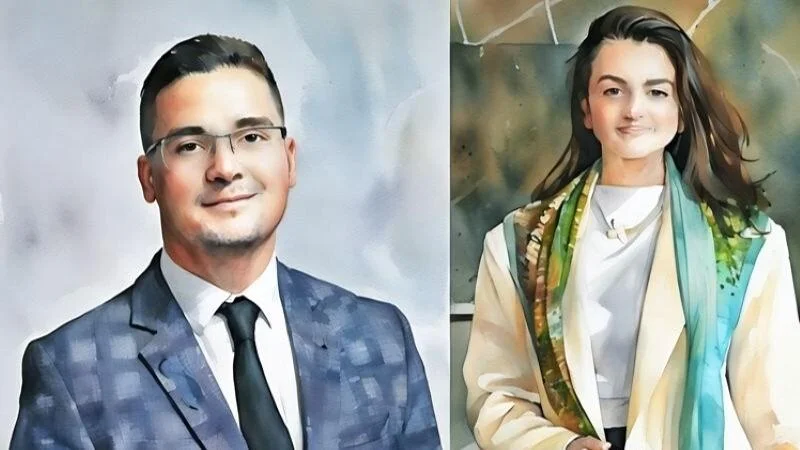
Yan Earl-Ruzhytskyi and Vitalina Shevchenko, Ukrainian youth delegates to the United Nations, say peace must be durable, dignified, and grounded in Ukraine’s ability to defend itself and sustain its sovereignty.
Earl-Ruzhytskyi describes his work as disciplined advocacy. “I do a lot of international advocacy, both in my capacity as a youth delegate to the UN and also just as a person who works in the civic sector,” he says. He credits early projects with teaching young Ukrainians how to communicate abroad. “Which narratives to use, how to formulate them, how to talk about Ukraine correctly, to actually make your position heard,” he says.
United Nations engagement, he says, remains essential. During recent work in New York, he collaborated with Ukraine’s permanent mission during the General Assembly and the Third Committee. “We delivered and made statements, we made tons of reports that were actually read,” he says. He points to UN resolutions that clearly define Russian aggression and war crimes. “There are several major UN resolutions that are extremely precise,” he says, adding that Poland and the Czech Republic have been especially active in raising Ukraine’s case.
Russian conduct at the UN, according to Earl-Ruzhytskyi, often aims to provoke rather than engage. Russia does not send youth delegates. “They don’t send them. They don’t need them,” he says. He recalls a Russian diplomat listing occupied Ukrainian cities as part of Russia’s youth policy. “That was a specific provocation targeted at us,” he says. “But it didn’t work.”
Peace negotiations, Earl-Ruzhytskyi says, must avoid false shortcuts. “If we wanted to have peace for the sake of peace, we would have had it a couple of years ago. What we want is a stable and lasting peace that won’t bring the war back to our territory.” He stresses security frameworks that do not depend on changing leaders. “One of the best security guarantees that we can have is to be self-sustained,” he says.
Shevchenko approaches the war through humanitarian work and resists politicizing demining. “I wouldn’t really combine those questions,” she says, emphasizing that her focus is clearance in Ukrainian-controlled areas. Ukraine has adopted a national mine action strategy with a ten-year horizon. “Our goal is to clear 80% of our land within the next ten years,” she says. She notes that shifting front lines left vast areas contaminated, affecting returns home, schooling, and farming. “That’s why Ukraine is investing in humanitarian de-mining now,” she says, highlighting innovation and non-technical surveys to determine actual contamination.
Loss shapes both delegates’ views. Earl-Ruzhytskyi says his uncle fought since 2014 and survived captivity, while people he knew from childhood were killed during the full-scale invasion. “This peace really must honor the lives that we unfortunately lost,” he says. Shevchenko says the war has defined her generation. “When the war started in 2014, I was like 11 years old,” she says. She struggles to reduce her motivation to a slogan. “For me, it’s a very clear thing that you don't even ask,” she says, comparing defense of the country to basic survival habits.
Both reject portrayals of Ukraine as dependent. “Ukraine is not a pure recipient of international aid, but a partner that you can trust,” Earl-Ruzhytskyi says. Ukraine is ready to contribute globally. “We are ready to share our experience, which is unique in the world,” he says. Shevchenko adds that culture also carries Ukraine’s message, recalling how traditional clothing abroad sparks questions and conversation.