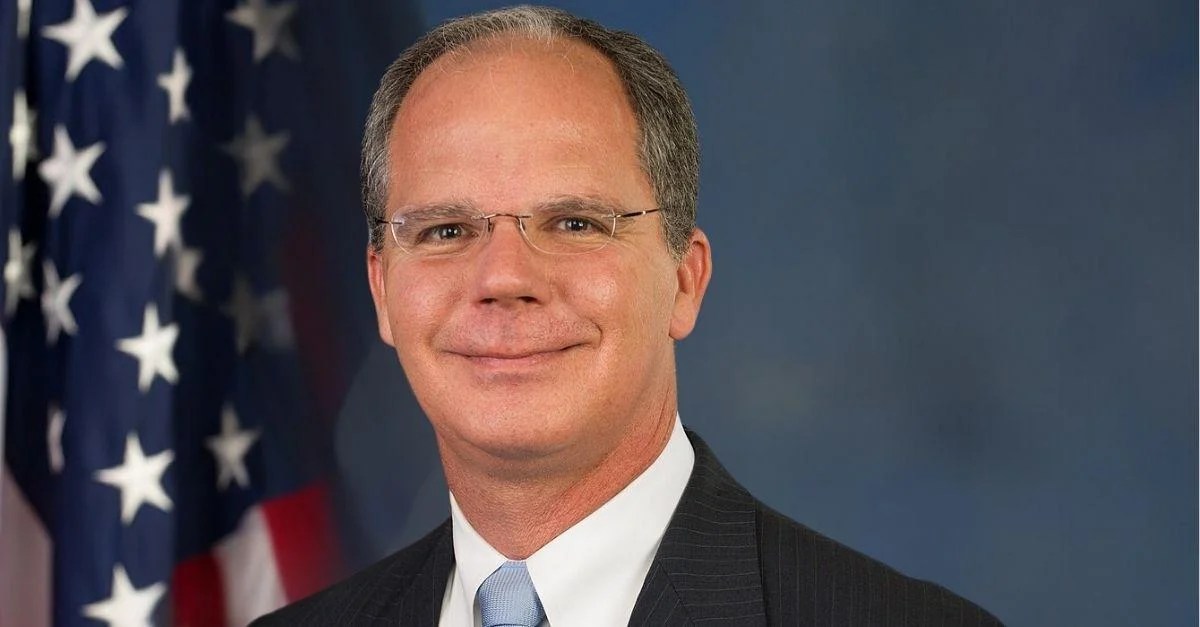
In a recent op-ed published by the Dallas Morning News, Congressman August Pfluger of Texas, who serves on the House Committee on Energy and Commerce, called attention to the current state of the Strategic Petroleum Reserve (SPR). He emphasized the importance of refilling the reserve to enhance national security and reinforce U.S. energy capabilities.
Pfluger wrote, “Following the 1970s oil crisis, Congress created the Strategic Petroleum Reserve (SPR) as America’s insurance policy against global energy supply disruptions. For nearly half a century, this emergency crude oil stockpile has served as an indispensable safeguard — ready to cushion the blow from unexpected market shocks, natural disasters or geopolitical conflicts.”
He noted that “today, however, this vital insurance policy is running on fumes. At just 409 million barrels, the SPR is at its lowest level since its inception, with less than 60% of its capacity currently being utilized.” According to Pfluger, this situation resulted mainly from a significant drawdown in 2022 by the Biden administration following Russia’s invasion of Ukraine. The release aimed to address high gasoline prices but was described as lacking a clear plan for replenishment.
“Three years later,” he continued, “the SPR remains dangerously depleted, and now the structural integrity of the salt caverns that protect the remaining barrels is at serious risk. Fortunately, there is a clear solution, and Washington must act on it.”
Pfluger pointed out that oil prices have recently been low compared to historical averages. He stated: “Oil prices have hovered near multiyear lows, offering a prime opportunity to replenish the reserve at a discount. This year alone, West Texas Intermediate (WTI) crude has dipped as low as $57 per barrel and has averaged around $65 per barrel — prices well below the $75-$80 assumptions often used in federal budget models. At today’s low prices, refilling the roughly 321 million barrel gap would cost less than $21 billion — a bargain by any measure for this scale of investment.”
He also referenced previous missed opportunities: “We should not repeat the mistakes of the previous administration that failed to capitalize on similar opportunities, making only token purchases even when prices fell below the $70 per barrel target. At that pace, restoring the SPR to its pre-2020 level of roughly 635 million barrels would take nearly a decade...”
Pfluger highlighted recent legislative efforts: “President Donald Trump and Congressional Republicans have taken a modest first step. In the Working Families Tax Cut (WFTC) law, we secured $850 million to refill the SPR: $171 million for crude purchases, $218 million for critical cavern repairs and $461 million to cancel...sale of 7 million barrels.” He added that these funds allow for purchasing about two million barrels based on current price estimates.
However, he argued that more action is needed: “While this is a start...If we are serious about reestablishing American energy dominance then refilling [the reserve] must be a top priority for Republicans in 2026.”
The congressman cited challenges with congressional appropriations slowing down timely purchases despite ample domestic production capacity: “The United States currently produces over 13 million barrels of oil per day...but current law requires DoE to wait for Congress to allocate funds before purchasing crude.”
He urged further reforms: “While a comprehensive overhaul of...appropriations process is necessary..., Congress can still make significant progress in upcoming annual funding measures and in next year’s budget reconciliation process.”
With industry leaders predicting stable or lower oil prices through 2026 amid rising geopolitical tensions worldwide—such as Chevron CEO Mike Wirth's outlook—Pfluger stressed urgency: “Congress must build on momentum from WFTC and prioritize appropriating necessary funds...” He concluded by stating: “The bottom line is that SPR is cornerstone of American energy security...refilling it now should not be reduced to partisan fight.... The next crisis will come. The only question is whether we will be prepared.”