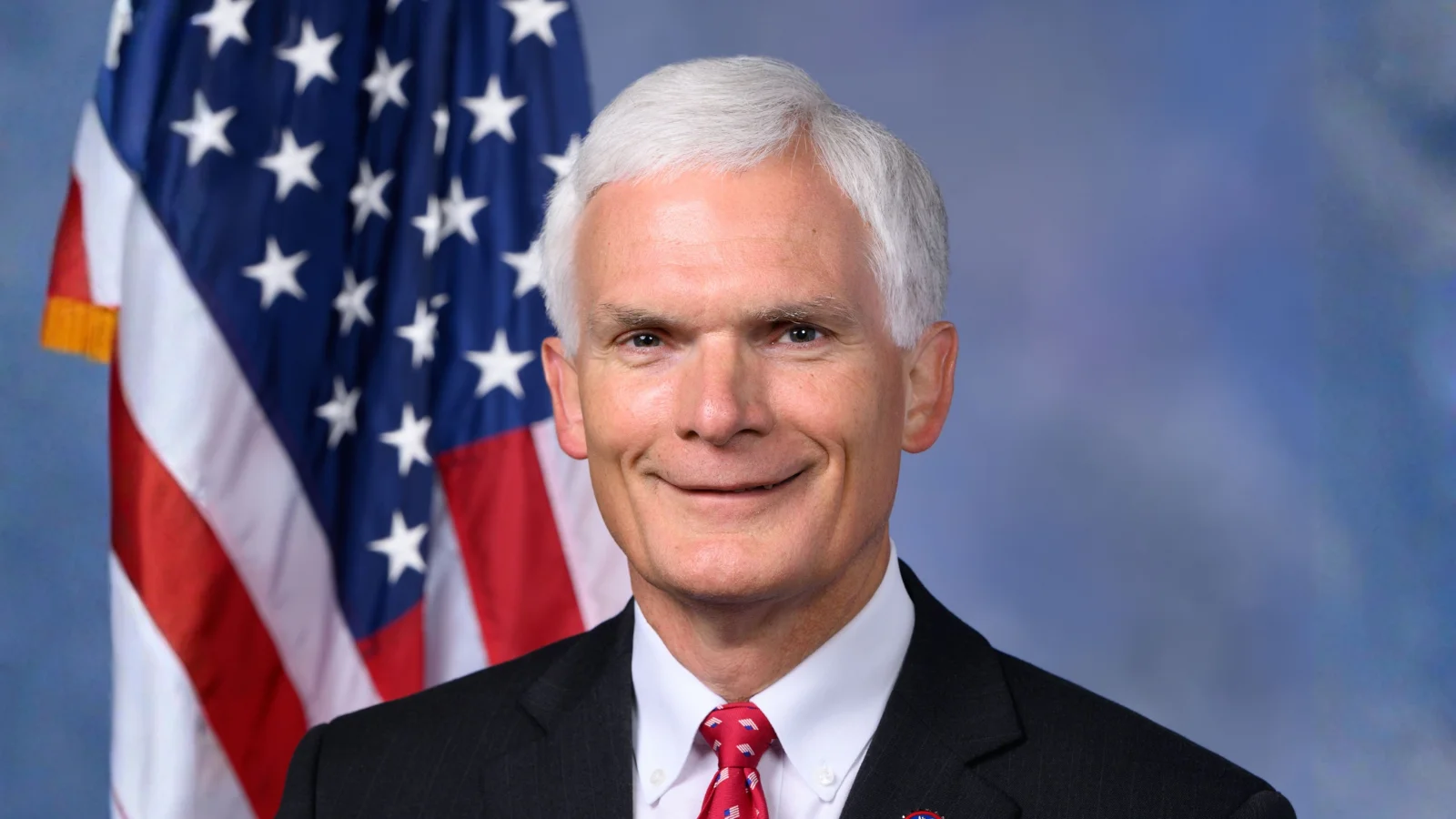
Congressman Bob Latta, Chairman of the Subcommittee on Energy, led a hearing in Washington, D.C. to review the Federal Energy Regulatory Commission’s (FERC) role in advancing affordable and reliable energy for Americans.
Chairman Latta stated, “Now, as our nation stands at the precipice of substantial change in the global economy, it is imperative for FERC to remain steadfastly focused on their core mission in order to fuel technological advancements and stabilize the bulk power system to keep the lights on. Winning the AI race, reshoring manufacturing jobs, and lowering energy costs are not mutually exclusive. When done properly, research continues to show that the growth of large energy users like data centers and manufacturing facilities can help stabilize the grid and make electricity more affordable.”
During the hearing, Congressman August Pfluger questioned how FERC collaborates with states that block pipeline projects and manages affordability concerns when states reject these projects. Chairman Swett responded, “That is a 100-billion-dollar question. Effectively, under the regime that Congress has created, and the Clean Water Act, states have the ability to veto a project if they do not give a certification, and that is a problem that FERC simply cannot work around. If Congress saw fit to change that, we would be happy and ready to implement any directives.” Swett added regarding natural gas delivery: “Well, I think as you very wisely stated at the beginning of your comments, the proof is in the pudding. The fact that areas that don’t have enough gas are paying maybe 300 times what they should, as you said, is unacceptable. That is not a just and reasonable rate for Americans.”
Congressman Troy Balderson addressed claims about LNG exports raising domestic prices by pointing out regional differences during Winter Storm Fern. He cited price disparities between Northeast regions with limited pipeline capacity versus Appalachia supply. Balderson asked about further actions FERC might take to expedite energy infrastructure construction for reliability and affordability. Chairman Swett replied: “Thank you for the question. I also am very concerned about Northeast prices, and one thing that was really shocking for me coming out of the storm was that, in the Northeast during Fern, 40 percent of generation came from fuel oil or diesel, and that’s simply because we don’t have enough gas infrastructure to bring gas to New England. So, I fully agree with you. That’s why we are looking to, wholesale across the board, take a hard look at our permitting actions. And when it comes to pipelines in particular, we are trying to streamline our NEPA process.”
Congressman Russell Fry referenced a recent Supreme Court decision regarding agency deference on environmental impact statements under NEPA regulations and asked how FERC adjusted its practices accordingly. Chairman Swett explained: “Thankfully, the Seven County decision allowed FERC, in my opinion, to realign our emissions analyses with our statutory responsibility as a primarily economic regulator charged with encouraging the development and plentiful supply of natural gas at reasonable prices, per Congress’s instruction. So what that means when the rubber hits the road is now we no longer analyze the indirect emissions from upstream production or downstream combustion.”
The House Energy and Commerce Committee oversees federal agencies such as FERC as part of its broad mandate over issues including energy policy (https://energycommerce.house.gov/). Established in 1795 as one of Congress's oldest standing committees (https://energycommerce.house.gov/), it addresses legislation related to energy innovation among other key topics (https://energycommerce.house.gov/).