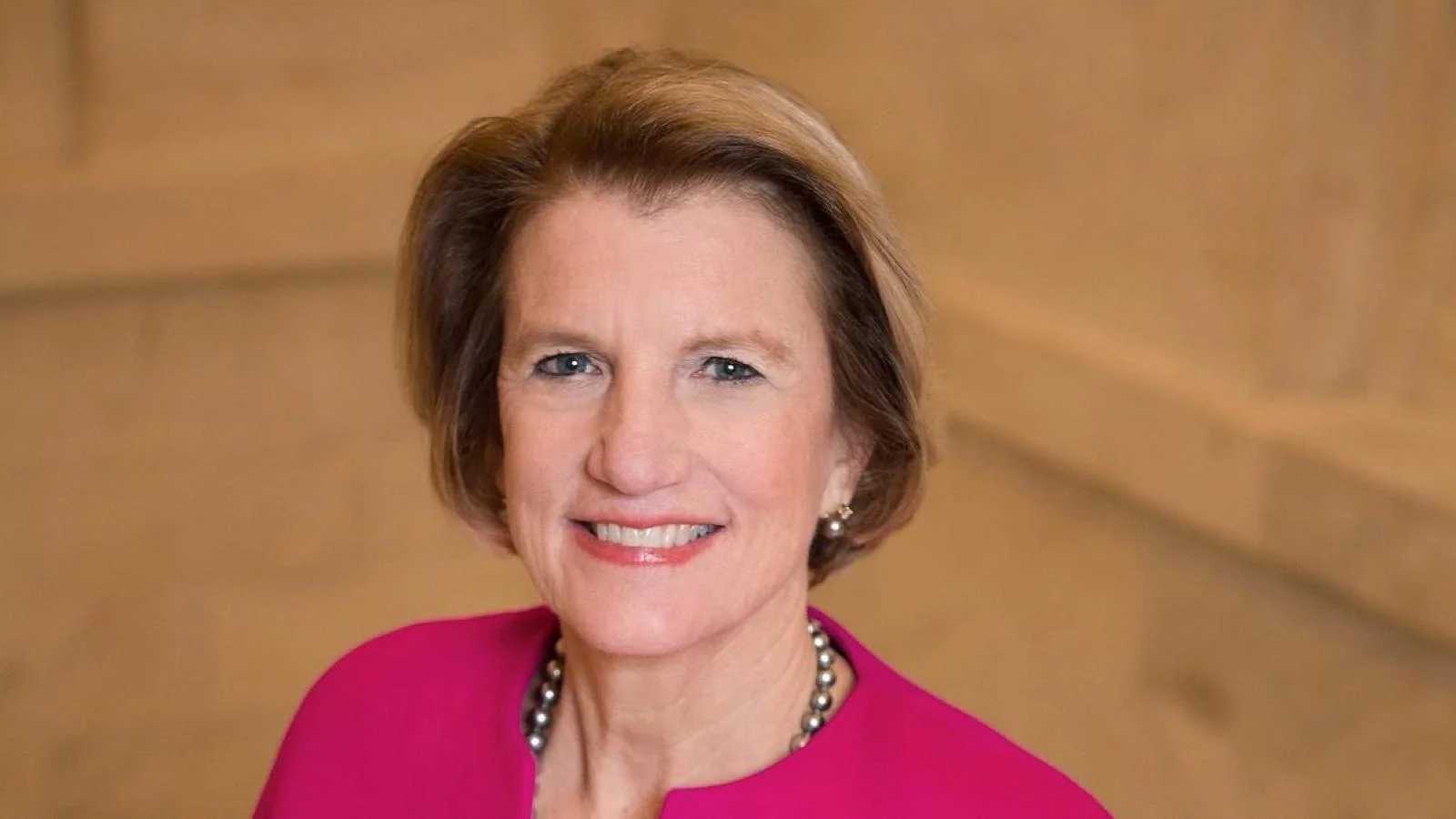
U.S. Senator Shelley Moore Capito, who chairs the Senate Environment and Public Works (EPW) Committee, led a hearing focused on cybersecurity challenges affecting water infrastructure in the United States. The session brought together experts to discuss vulnerabilities and possible solutions for both large and small water systems.
During the hearing, Chairman Capito questioned Dr. Scott Simonton of Marshall University’s Institute for Cyber Security about efforts to provide specialized cybersecurity support—known as circuit riders—to smaller water utilities in West Virginia. She asked, “Dr. Simonton, you highlighted obviously that Marshall University’s Institute for Cyber Security is presently partnering with Anstead, which is […] a very small area, and the Huntington Water System […]. I was interested to hear [about], and I heard this from the rural water utilities folks that came in to see me yesterday from West Virginia, the cybersecurity circuit rider idea through [Department of Agriculture]. So, if you could frame out, just briefly, how valuable circuit riders are in general for physical infrastructure for the smaller systems and then how, as somebody dedicated fully to cyber, [do you believe] a dedicated cyber [expert] would be the best, or somebody who has that enhanced credentialing that could do both on the existing program?”
Dr. Simonton responded by describing ongoing initiatives: “As far as the circuit rider is concerned, [Marshall] University is already […] moving towards supplying both students to do these things for utilities or others that don’t have that in-house capacity. And of course, also for our national guard units that we’re training, not just in water cyber, but in infrastructure security in general. So, I would see or we would see these circuit riders as dedicated certainly to cybersecurity because that is the need within the utilities. […] And they provide that expertise. They basically become consultants to the various utilities [and] provide the expertise that they don’t already have.”
Chairman Capito emphasized technical assistance needs: “[…] Technical assistance is what all three of you have said you really need. You’re not expecting the one- and two- and three-person utility to be able to meet this challenge on their own. They have to have this assistant. [Could there be] a framework for smaller systems that could then sort of be a plug-and-play [system] […]?”
Simonton explained efforts toward such solutions: “That’s what we are trying to develop is this scalable plug-and-play framework. Every system, of course, is going to be different, but the needs are going to be very similar. They’re going to have very similar systems. They’re going to have very similar threats. They’re going to have very similar needs. And so, we’re developing this framework that can apply, not just to water utilities, but across infrastructure. And so again it’s providing that in-house expertise that they don’t have.”
Addressing rural communities’ unique challenges with Matt Odermann from North Dakota Rural Water Systems Association, Chairman Capito asked about North Dakota's system count: “Mr. Odermann... How many different systems do you have in North Dakota?” Odermann replied: “There’s 282 members of the Association. It’s 97% of the state so it’s significant.” On leveraging existing programs he added: “The Circuit Rider Program is single-handedly the most successful built-up program that I see in our state... Those trusted relationships between those systems and state associations are built... if we were able to spin up a technical circuit rider for cybersecurity I imagine uptake on that would be significant.”
On workforce development issues facing water utilities—a subject under EPW Committee oversight—Chairman Capito discussed recruiting young talent with Scott Dewhirst from Fairfax Water: “I want to talk about workforce challenges because this is something I’ve been interested in and in several bills in the past... trying to get young people interested in this as a career is... difficult... Have you had any experience with apprenticeship programs?” Dewhirst described his organization’s approach: “At Fairfax Water we do take a pretty aggressive approach with summer internships... This gives students a chance to really see what is involved even in cyberspace even technology space laboratory whatever it may be... We think that's a great approach.”
In her closing remarks Capito reflected on community impacts following attacks or disruptions: “I’d like to make an additional point as someone who lives in a community that lost their water source through a chemical spill for many weeks... It becomes a very emotional response... The authorities health authorities and otherwise unless they're crystal clear—and we've gone through this with CDC because they were not—begin take on greater role... whether it's cyber attack or chemical spill or whatever.
“So if you are able infiltrate successfully cyber-attack one your smaller systems there might people say ‘oh well only serves 2 500 people That doesn’t really matter.’ But what matters lack trust cascading effect every rural community ‘this could me How do know?’ That’s why think at every level need make sure protections afford larger systems same protections can provide smaller systems.
“[…] I think there’s lot more connectivity here and [a greater] emotional part protecting our rural water systems than really got into today I would identify also gap think need better data how many attacks we have [...] how many where occurring how occurred That's always good best practices try prevent future attacks.”
The Senate Environment and Public Works Committee maintains its administrative base at the Senate Dirksen Office Building where it supports hearings such as this one addressing nationwide environmental quality concerns including water security.
The committee oversees federal programs related not only environmental quality but also natural resources infrastructure balancing conservation national needs as outlined officially. Under Chair Shelley Moore Capito—with members including Kevin Cramer Cynthia Lummis—the committee influences legislation affecting environmental regulations wildlife protection infrastructure maintenance across United States according its website. Its subcommittees address topics such clean air transportation infrastructure clean water resources in collaboration with stakeholders.