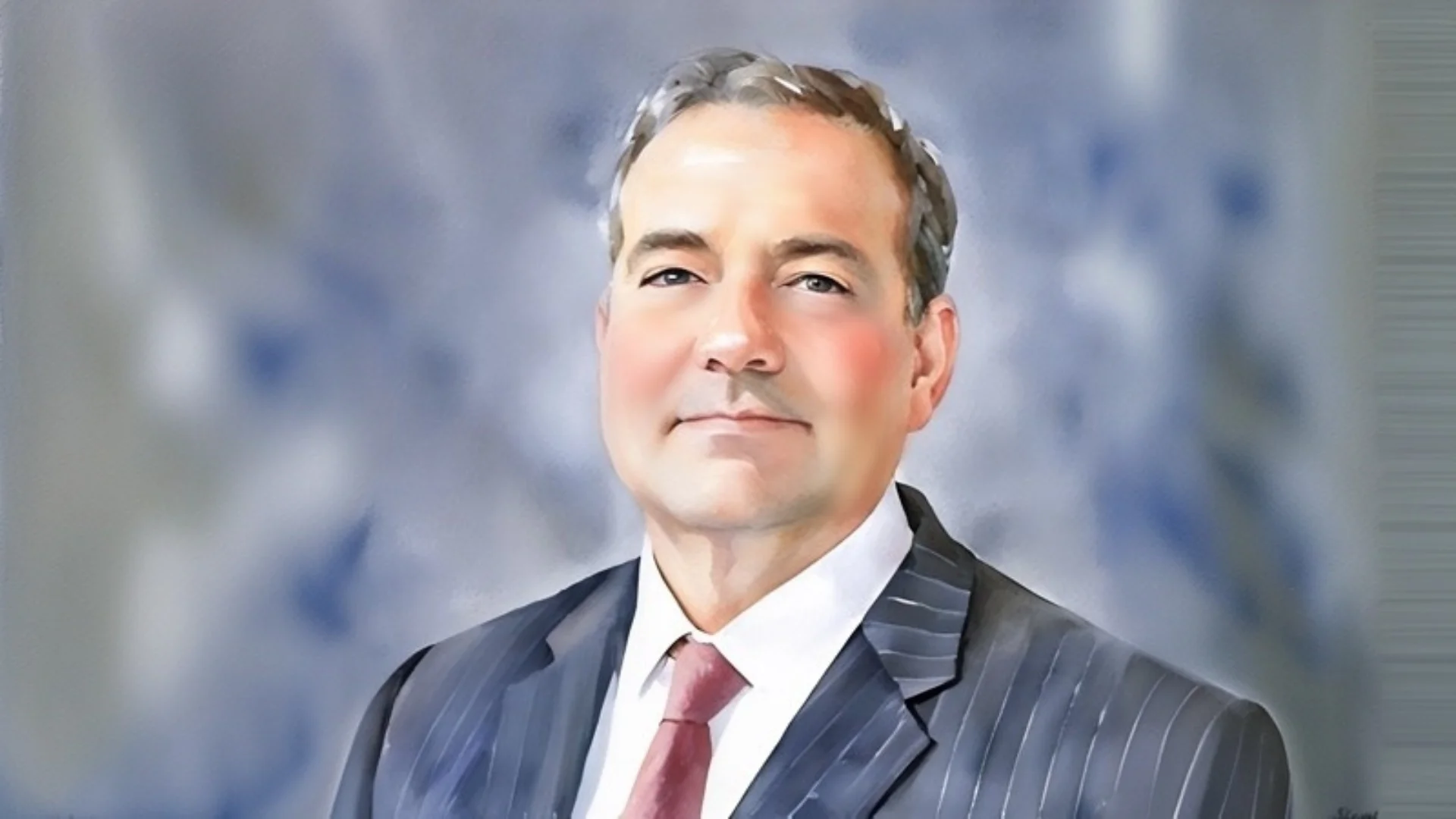
According to Daniel Runde, the United States must rethink how it deploys nonmilitary power, especially in the developing world, if it hopes to compete effectively with Beijing.
Runde, a senior advisor at BGR Group, is the author of The American Imperative: Reclaiming Global Leadership Through Soft Power. He previously led the Project on Prosperity and Development at the Center for Strategic and International Studies, where he held the William A. Schreyer Chair in Global Analysis.
According to Runde “we’re in competition with China… in three theaters,”including defense, technology, and what he calls “the developing world.” That third arena, he argues, is underappreciated by U.S. officials. “Most of these countries… their number one trading partner is China,” he says. Beijing often controls debt, ports, telecom systems, and mineral processing in those regions. “You quickly realize that China began to manage both the commanding heights of the economies of these countries… and the infrastructure of these countries,” he says.
Runde describes two threshold questions he asks when visiting foreign capitals: “Where do you send your elites to study and where do you buy your guns from?” Thousands of students from Africa and elsewhere now study in China on scholarship. “I want the finance minister to have Boston on speed dial, not Beijing on speed dial,” he says. Soft power, in his view, means shaping long-term relationships through trade, education, and investment rather than relying solely on military force.
On the military front, he supports renewed focus on Greenland and Arctic security. “Great power competition has come to the Arctic,” he says, citing minerals, missile defense, and expanded Russian activity. Hypersonic weapons require early warning systems, and Greenland’s geography makes it strategically significant. “We need it for that,” he says.
He also praises efforts to pressure Nicolás Maduro’s regime in Venezuela. President Trump “cut the Gordian knot of complexity,” Runde says, describing actions aimed at curbing drugs, destabilizing criminal networks, and limiting Russian, Iranian, and Cuban influence.
Ukraine also factors into his broader framework. Runde credits prior decisions to arm Kyiv and urges a long-term strategy focused on strength rather than symbolism. “The best security guarantee is a strong Ukrainian military,” he says. He believes Ukraine’s diversified economy offers significant upside. “That kind of a diverse economy has all the ingredients” for long-term growth, he says, predicting Ukraine could outpace Russia economically in the coming decades.
Strong language from U.S. leaders, Runde argues, has forced allies to increase defense spending. “We want more equitable burden sharing on defense,” he says. Nonmilitary tools remain equally important. “Most of our competition could be nonmilitary,” he says, emphasizing trade, minerals, education, and infrastructure as central battlegrounds.
Relying on soft power, in Runde’s view, does not mean weakness. It means clarity about where influence is won. “What’s our nonmilitary strategy in the third world?” he asks. That question, he argues, will define whether the United States can compete successfully with China across the globe.