The U.S. House of Representatives has moved forward with nine bills focused on public and tribal lands, mineral resources, and other related issues. These measures aim to expand access to federal lands, support tribal interests, and strengthen domestic mineral security.
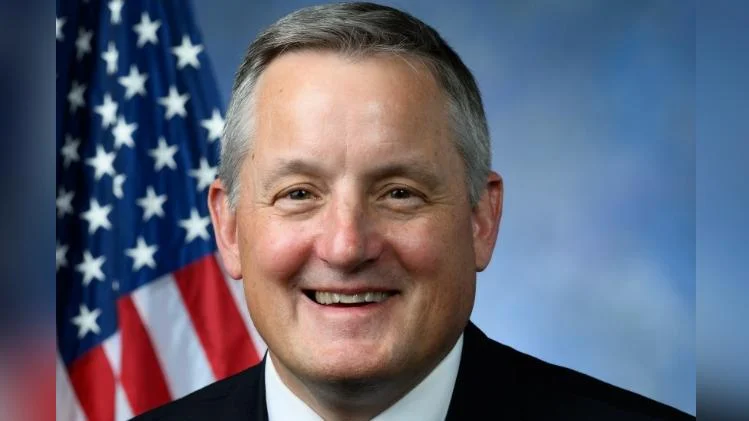
House Committee on Natural Resources Chairman Bruce Westerman (R-Ark.) commented on the passage of these bills. “Today, we are delivering results to the American people by expanding access to public lands, conserving historic sites, empowering tribes and unleashing American mineral resources. I thank my colleagues for their work leading legislation that improves the lives of all Americans.”
Among the legislation advanced is H.R. 755, the Critical Mineral Consistency Act of 2025. Introduced by Rep. Juan Ciscomani (R-Ariz.), this bill would create a new list combining critical minerals identified by both the U.S. Geological Survey and materials designated by the Department of Energy. Federal agencies would be required to use this list when administering programs related to critical minerals or materials.
Another bill, H.R. 1945—the America’s National Churchill Museum National Historic Landmark Act—was introduced by Rep. Bob Onder (R-Mo.). It designates the museum at Westminster College in Fulton, Missouri as a National Historic Landmark; this site is notable for Winston Churchill’s “Sinews of Peace” speech delivered in 1946.
H.R. 3903, called the Chugach Alaska Land Exchange Oil Spill Recovery Act of 2025 and sponsored by Rep. Nick Begich (R-Alaska), addresses land ownership challenges in Chugach, Alaska through a land exchange intended to restore economic value for Native shareholders and promote more unified land management under the Chugach Alaska Corporation.
The America the Beautiful Motorcycle Fairness Act (H.R. 4386), introduced by Rep. Tim Walberg (R-Mich.), allows holders of annual passes to enter national parks and federal lands with up to two motorcycles—a policy previously reinstated during the Trump administration—and is expected to encourage motorcycle tourism ahead of America’s 250th anniversary next year.
Efforts to improve internet connectivity for rural and tribal communities are reflected in H.R. 5419—the Enhancing Administrative Reviews for Broadband Deployment Act—introduced by Rep. Thomas Kean (R-N.J.). The bill aims to identify regulatory barriers hindering high-speed internet deployment in underserved areas.
Rep. Harriet Hageman (R-Wyo.) put forward H.R. 5910, which amends existing law so federally recognized Indian Tribes can lease trust land for up to 99 years with approval from the Secretary of the Interior.
H.R. 6365—the Wintergreen Emergency Egress Act—introduced by Rep. John McGuire (R-Va.), mandates that an emergency exit route be constructed for Wintergreen, Virginia.
Two additional bills relate specifically to Massachusetts tribes: H.R. 681 from Rep. Bill Keating (D-Mass.) authorizes leases up to 99 years for land held in trust for both Mashpee Wampanoag Tribe and Wampanoag Tribe of Gay Head; while H.R. 3692 from Rep. Seth Moulton (D-Mass.) reauthorizes support programs for young fishermen through fiscal year 2031.
These legislative actions reflect ongoing efforts within Congress to address issues affecting public lands management, resource development, tribal sovereignty, infrastructure needs, and local economies.