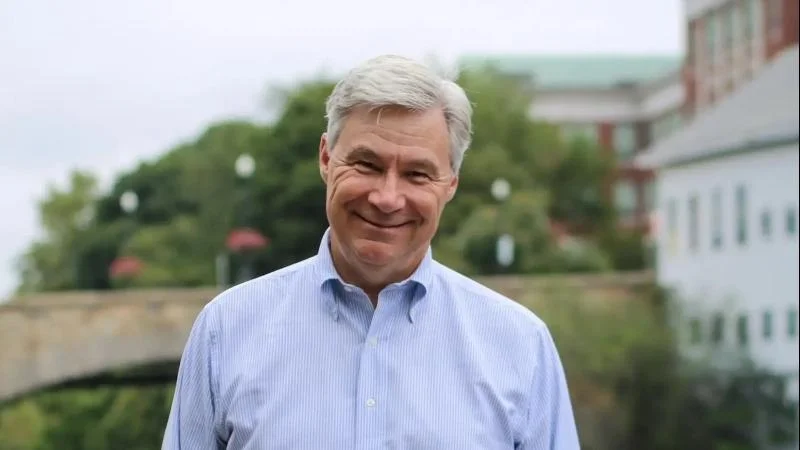
Senator Sheldon Whitehouse, the Ranking Member of the U.S. Senate Environment and Public Works (EPW) Committee, gave an opening statement at a legislative hearing to review a discussion draft of the Toxic Substances Control Act Fee Reauthorization and Improvement Act of 2026.
Whitehouse thanked Chair Capito for organizing the hearing and expressed appreciation for witnesses contributing their expertise. He noted that there are different views on how to improve the law, stating, "Chair Capito has released her own discussion draft. While I don't like many of its components, I appreciate Chair Capito's willingness to engage with Democrats and listen to our perspectives during today’s hearing. I am hopeful that we can find common purpose in trying to make the law more effective while also more protective of public health."
He highlighted the significance of the 2016 Lautenberg Chemical Safety Act (LSCA), which he described as a major step in strengthening TSCA's role in protecting public health. Whitehouse said, "The 2016 Lautenberg Chemical Safety Act was a historic achievement. Working together, we strengthened TSCA to better deliver on the law’s fundamental purpose: to protect the public. I am proud to have played a role in those negotiations."
Whitehouse explained that LSCA established a fee supporting about a quarter of EPA’s new chemicals review program, which is set to expire on September 30. He warned that without reauthorization, EPA’s capacity for independent chemical safety analyses would be significantly reduced.
He raised concerns about recent developments at EPA since January 2025: "When it comes to chemical safety, the biggest challenge we face is the corporate capture of the EPA since January of 2025. The EPA has long faced funding and staffing challenges that have impeded it from fully executing its statutory missions. Now things are even worse: high-ranking representatives of the chemical industry run the chemicals office."
Whitehouse emphasized that innovation and competitiveness are important but argued against unregulated industry oversight: "Innovation and the global competitiveness of American business is important; however, unregulated industry has not proven to be a trustworthy steward of public or environmental health. The fossil fuel, tobacco, and pharmaceutical industries demonstrate time and again that profits trump truth and the public interest."
He cited testimony from an October subcommittee hearing about PFAS manufacturers hiding product risks from human health for decades as evidence for stronger safeguards in TSCA discussions.
Whitehouse also addressed scientific integrity concerns regarding agency decision-making under recent executive orders: "The Trump administration has consistently demonstrated a willingness to deform the definition of 'best available science.' The so-called 'Gold Standard Science' executive order gives agency appointees beholden to Trump’s industry donors, not scientists with objective expertise, authority to 'correct scientific information.' That is not science."
He continued by emphasizing support for scientists who operate independently: "Real science entails replicable, iterative methods for answering questions... Those best positioned to carry out these methods are scientists who have been properly trained and who do not have financial conflicts of interest. We have an obligation to protect science, and the scientists, from political interference."
Regarding provisions in Chair Capito's draft legislation, Whitehouse acknowledged some positive aspects such as peer review processes but voiced concern over measures he believes could weaken protections or defer too much authority to industry interests.
"I look forward to exploring if there is a package of real improvements – changes that further public health – that we can report out of this Committee," he concluded. "If not, I'm ready to report a simple fee reauthorization."
The Senate Environment and Public Works Committee oversees federal programs related to environmental quality and infrastructure across America through hearings held at its administrative base in Washington D.C.’s Senate Dirksen Office Building (source). Chaired by Shelley Moore Capito alongside members such as Kevin Cramer and Cynthia Lummis (source), it manages legislation affecting conservation efforts nationwide (source) while collaborating through specialized subcommittees focused on clean air, water resources, wildlife protection, transportation infrastructure maintenance (source).