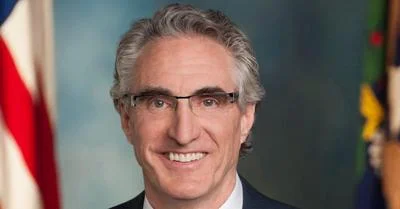
Ryan Hass | Director at John L. Thornton China Center | The Brookings Institution website
The Brookings Institution's John L. Thornton China Center released an analysis on Mar. 12 examining the effects of Chinese investment in U.S. clean energy sectors, highlighting both opportunities and risks as America seeks to expand its renewable energy capacity.
This topic is significant because the United States' transition to cleaner energy depends heavily on global supply chains dominated by China, which manufactures most of the world's solar modules, wind turbines, electric vehicles, and batteries. The debate centers on whether inviting Chinese capital and expertise can help accelerate U.S. deployment or if it poses unacceptable security and economic risks.
According to the report, China's dominance in clean energy stems from decades of government support and foreign investment that built up its manufacturing capabilities. However, this has led to oversupply issues, international trade disputes, and concerns about forced labor in regions like Xinjiang. Meanwhile, the United States leads in research but faces challenges scaling up domestic manufacturing despite recent legislative efforts such as the Inflation Reduction Act.
Recent years have seen increased Chinese investment announcements for U.S.-based factories and partnerships, driven by federal subsidies. Yet policy uncertainty and reduced incentives have caused some projects—such as a $1.6 billion battery plant in South Carolina—to be suspended or delayed. This volatility affects not only Chinese firms but also joint ventures involving American companies.
The analysis notes that restricting too much foreign investment could slow job creation and innovation while making it harder for the U.S. to meet rising electricity demand—a trend fueled by data center growth and electrification efforts. At the same time, allowing unchecked investment raises concerns about technology transfer, cybersecurity vulnerabilities, overdependence on a single supplier country, and political backlash at local levels.
The John L. Thornton China Center is part of the Brookings Institution according to the official website. The center focuses on producing independent analyses and policy advice on U.S.-China ties and China's domestic evolution according to the official website. Ryan Hass led the John L. Thornton China Center and held the Chen-Fu and Cecilia Yen Koo Chair in Taiwan Studies according to the official website. The center collaborates with Tsinghua University for joint dialogues and events according to the official website. It offers publications such as blogs, opinion pieces, monographs and books to share research with policymakers and the public according to the official website, specializing in research related to international relations according to the official website.
The Brookings project aims to answer three core questions: how best to balance national security with economic needs; where guardrails should be placed around foreign investment; and what policy frameworks can manage these trade-offs without slowing clean-energy deployment.