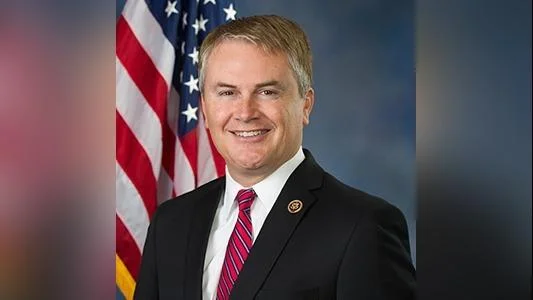
James Comer is Chairman of the House Oversight Committee. | https://oversight.house.gov/chairman-james-comer/
The Subcommittee on Government Operations held a hearing on March 18 to examine the U.S. Postal Service's worsening financial situation and review reform initiatives led by Postmaster General David Steiner. Lawmakers discussed whether the agency can become financially stable enough for Congress to consider increasing its borrowing authority from the Department of the Treasury.
The topic is significant as USPS continues to lose billions of dollars, raising concerns about its ability to provide reliable service and remain solvent without major changes or additional support from Congress.
During the hearing, Steiner explained that declining mail volume has led to substantial revenue losses for USPS. "[USPS] got here because of the drastic reduction in the use of the mail, from historic peak volume of 213 billion pieces per year to today at 109 billion pieces per year. [USPS] lost over 104 billion pieces per year in [its] system. For perspective, if all of that lost volume was paid at the current price of a stamp, which is $0.78, that’s about $81 billion of lost revenue. No company could weather that much revenue loss, so it’s not hard to see how we got here," Steiner said.
David Marroni, Director of Physical Infrastructure at the U.S. Government Accountability Office, said there are no easy solutions but emphasized action is needed before a crisis occurs. "While USPS has been able to increase its revenue and cut some costs, its overall expenses have grown at a faster rate, while its service performance has declined. This pattern is not sustainable," Marroni said.
Steiner outlined steps being taken to address finances: "We’re taking steps to fight our way back above water on pricing... If we were to change the stamp price to $0.95... that would largely solve our controllable loss." He also described cost-cutting measures such as transforming network operations and shifting more positions toward non-career employees.
Lawmakers questioned spending decisions like continuing costly programs already offered by private companies and purchasing expensive electric vehicles. House Oversight Committee Chairman James Comer asked why USPS continues certain programs despite recommendations for their termination: "The [Office of the Inspector General] found that the Postal Service has spent over $1.5 billion developing the SHIP program... The program wasted billions... will you or will you not commit to ending this program immediately?"
Concerns were also raised about service quality and whether ongoing reforms are effective. Rep. Virginia Foxx cited constituent complaints about delayed mail and asked what evidence supports current strategies: "If you want people to continue to use the Post Office, then they have to get the kind of service that they deserve and have had in the past... what evidence suggests the current plan is working?"
Steiner acknowledged ongoing challenges but expressed commitment: "We absolutely have to do a better job with what we call the tale of the mail... You started to see some very good progress in service. So I’m not going to sit here and tell you that we’re there yet." He added that inflation continues eroding savings despite reductions in work hours.
Marroni concluded Congress may need both short-term relief measures and long-term structural changes: "It is highly unlikely that USPS will be able to fix its poor financial condition on its own... If those underlying issues aren’t addressed now, USPS will likely continue to struggle financially, and its service performance may decline further." Subcommittee Chairman Pete Sessions closed by emphasizing bipartisan cooperation: "I believe us working together can accomplish this... I think that when we try and move that needle too far one way or another, I think it works adversely against the best interest of the whole."