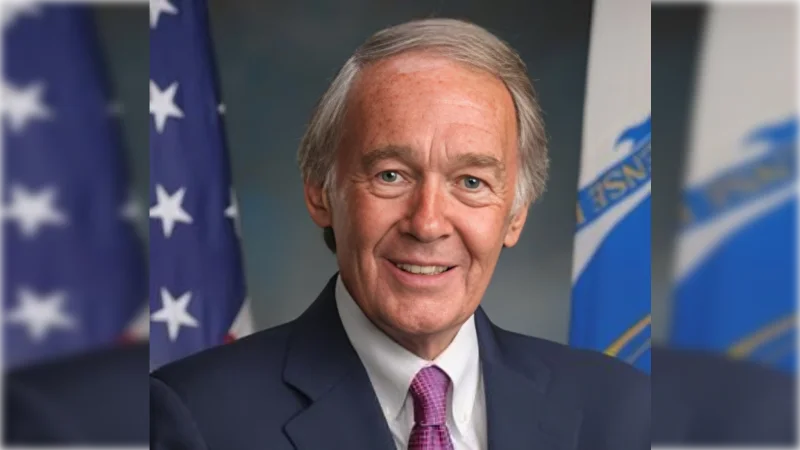
Ranking Member Edward J. Markey said on March 27 that the Trump administration's recent decision to limit the Randolph-Sheppard priority threatens opportunities for blind entrepreneurs and workers across the United States.
The issue concerns a policy change by the Department of Education, which restricts a law from 1936 that allows blind entrepreneurs to operate dining facilities at military installations. According to Markey, this new limitation could jeopardize at least 24 dining contracts at 22 Army bases, including Fort Devens in Massachusetts.
In a letter addressed to Secretary Linda McMahon, Markey urged immediate reversal of the limitation and called for continued support for blind vendors. He wrote, “For almost 90 years, blind vendors have demonstrably fulfilled the responsibilities of the [Randolph-Sheppard] program with excellence, generating reliable revenue for their local economies and dignified livelihoods for themselves and their employees. Your approval of a limitation on the Randolph-Sheppard priority as applied to all Army dining contracts marks the first time in history that such a categorical exemption spanning multiple facilities has been granted. The resulting effect is to displace experienced blind entrepreneurs and jeopardize the financial stability of these vendors and their employees.”
Markey further stated in his letter: “Moreover, this decision undermines the bipartisan legacy of the Randolph-Sheppard program, which Congress has repeatedly reaffirmed over many decades as a model for providing meaningful employment and entrepreneurial opportunity to blind individuals. The Department’s abrupt departure from that commitment erodes public trust in the Department and adds further arbitrary barriers to success for blind Americans. The Randolph-Sheppard program does not provide handouts; instead, it offers a hand-up to individuals seeking entrepreneurship and economic self-sufficiency.”
Advocates also voiced concern about how these changes would affect those who rely on such programs. Scott Thornhill, Executive Director of the American Council of the Blind said: “The Randolph-Sheppard program is a vital source of economic opportunity and independence for people who are blind... Diminishing these opportunities undermines decades of bipartisan commitment to self-employment and independence for people who are blind or have low vision.” Nicky Gacos, President of the National Association of Blind Merchants added: “Blind entrepreneurs have a proven record... Weakening this priority puts our livelihoods at risk and undermines a Congressionally mandated program that has delivered economic opportunities for nearly ninety years.”
The Senate Small Business and Entrepreneurship Committee supports informed decision-making on national fiscal priorities according to its official website. The committee also provides Congress with comprehensive policy options related to federal budget components according to its official website. Lindsey Graham serves as chairman while Jeff Merkley is ranking member according to its official website.
Additionally, this committee contributes through resolutions during congressional budget processes according to its official website, was established under legislation passed in 1974 according to its official website, and provides nonpartisan analysis through oversight functions involving budget matters according to its official website.
Markey requested answers from Secretary McMahon by April 10 regarding compliance with existing laws supporting small business participation among disabled Americans. Observers will be watching how future decisions may impact access or support structures available through longstanding federal programs.