Global instability is intensifying debates over America’s role in the world. Russia’s war in Ukraine, rising tensions with China, and conflict in the Middle East are testing whether the United States should lead abroad or pull back.
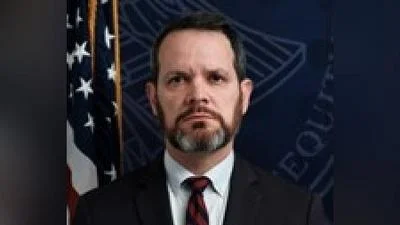
Daniel Twining, president of the International Republican Institute, says that sustained engagement is essential to protecting American interests and democratic allies.
Twining has led the International Republican Institute since 2017, overseeing programs in more than 100 countries to strengthen democratic institutions and political participation.
Twining describes his organization’s mission as a form of strategic investment in stability. “Where countries can govern themselves well, it just solves a lot of problems for America,” he says. “They don’t export refugees and migrants. They don’t export narco trafficking, nuclear proliferation. They don’t invade and try to conquer their neighbors.” He adds that promoting democratic governance abroad serves U.S. interests by preventing crises before they require military intervention.
Work at the institute spans election monitoring, leadership training, and support for reform movements worldwide. “We’re working with freedom fighters in places like Iran and Cuba and Venezuela,” Twining says, while also helping ensure “that China doesn’t come in and co-opt and corrupt and coerce foreign politicians.” He emphasizes that strong governance abroad reduces instability at home, calling it “a pretty sound national security argument for investing in freedom and good governance.”
Russia’s trajectory shows what happens when democratic progress collapses. Twining notes that his organization once operated openly in Russia after the Soviet Union fell. “Russians were hungry for what we had to offer, which was help in building democratic institutions,” he says. He rejects the idea that Russia is inherently authoritarian, adding that “millions of citizens don’t want to have corrupt criminals governing them.” He points to figures like Vladimir Kara-Murza, who returned to Russia to oppose the war and was imprisoned, as evidence of that internal resistance.
According to Twining, authoritarian regimes ultimately fear their own people more than foreign adversaries. “Putin is fundamentally afraid of people like Evgenia and Vladimir Kara-Murza,” he says, noting they “possess no weapons… but they go right after Putin’s Achilles’ heel,” exposing corruption and repression.
Debate over the direction of U.S. foreign policy is central to his message. Twining warns against isolationism, citing history as a cautionary guide. “When America has pulled back and pulled out, bad things have happened,” he says, pointing to both World Wars as examples. He frames engagement as a way to prevent larger conflicts, arguing that diplomacy and partnerships often reduce the need for force. “It often means just the day-to-day work of diplomacy and cultivating trade and investment relations,” he says.
Ukraine is central to that argument. Twining credits the country’s democratic institutions with enabling its resilience against Russia’s invasion. “One underreported reason that Ukraine has been so successful is that Ukraine has real governance institutions,” he says. He highlights the role of local leaders, adding that “there are just great heroes at the local level who have done that throughout the war.”
He also sees Ukraine as more than a recipient of aid. “Ukraine is a security provider, including to American forces in the Middle East,” he says. “It turns out that Ukraine is one of our very best allies in Europe.” He frames support for Ukraine as mutual defense, explaining, “Standing with these frontline democracies is a form of self-defense… what we give, we get back.”
Twining says Russia’s long-term position is weakening despite continued fighting. “I don’t see a scenario where Putin can win,” he says, arguing that the war has left Russia isolated, economically strained, and dependent on China. Ukraine, by contrast, “has managed to hold its own” and demonstrated democratic resilience.
China remains the broader strategic concern, according to him. Twining describes an “axis of autocracies” that includes China, Russia, Iran, and North Korea, working together to challenge the international order. “The greatest danger to freedom in the world is the Chinese Communist Party and the totalitarian global ideological ambitions of Xi Jinping,” he says.
Domestic unity, he says, is critical to confronting those challenges. “Our adversaries benefit when we are disunited and fighting amongst ourselves at home.” He calls for renewed agreement on core principles, including constitutional government and national identity. “We have to go back to agreeing on a couple big things… that we’re all Americans,” he says.