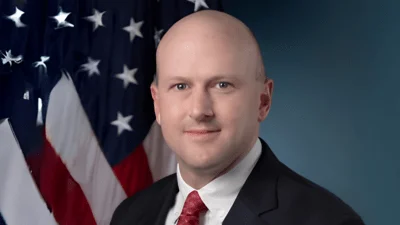
Ryan Hass | Director at John L. Thornton China Center | The Brookings Institution website
President Donald Trump is scheduled to meet with President Xi Jinping in Beijing on May 14-15 to discuss areas of mutual cooperation on artificial intelligence, including security and threats from nonstate actors. The upcoming summit has drawn attention to how the United States and China might address shared concerns about the misuse of AI technologies.
The discussion is significant because both countries are leaders in AI development and face common national security risks. In a written interview, Ryan Hass, Director at the John L. Thornton China Center, asked Kyle Chan, a fellow at the same center, about why direct engagement between the United States and China on AI risks is important now. "AI models are becoming powerful enough to create serious national security risks. In the wrong hands, they could help malicious actors launch cyberattacks, target critical infrastructure, or develop biological weapons. The United States and China are both potential targets for such attacks. Both nations share a common national security interest in preventing AI-enabled attacks from terrorist groups, criminal networks, and other nonstate actors," Chan said.
Chan outlined several concrete actions that could reduce these risks: "First, nonbinding AI guidelines: The United States and China should establish a common set of nonbinding safety guidelines for deploying frontier AI models... Second, limited information sharing: The United States and China should share limited information about the attempted misuse of AI systems... Third, an AI emergency hotline: The United States and China should establish formal and informal emergency communication channels for AI-related incidents." According to Chan's responses in the interview with Hass,
these steps do not require broad trust or strategic alignment but can help both sides take practical measures against shared threats.
On what issues may concern Xi during his meeting with Trump regarding AI policy discussions,
Chan said: "Global AI governance: Xi wants to position China as a leader in shaping global AI governance... Military and AI: China is closely watching how the U.S. military is using AI in recent conflicts... Putting a floor on AI competition: The United States and its allies have imposed a broad set of technology controls on China." These topics reflect ongoing competition as well as opportunities for dialogue between Washington and Beijing.
The John L. Thornton China Center at Brookings Institution specializes in research related to international relations between the U.S. and China,according to its official website. It produces independent analyses through publications such as blogs,
opinion pieces,
and books;
offers policy advice; collaborates with Tsinghua University;
and provides expertise through scholars like Hass who also holds the Chen-Fu and Cecilia Yen Koo Chair in Taiwan Studies.According to Brookings,
the center aims to inform policymakers about developments impacting U.S.-China ties.