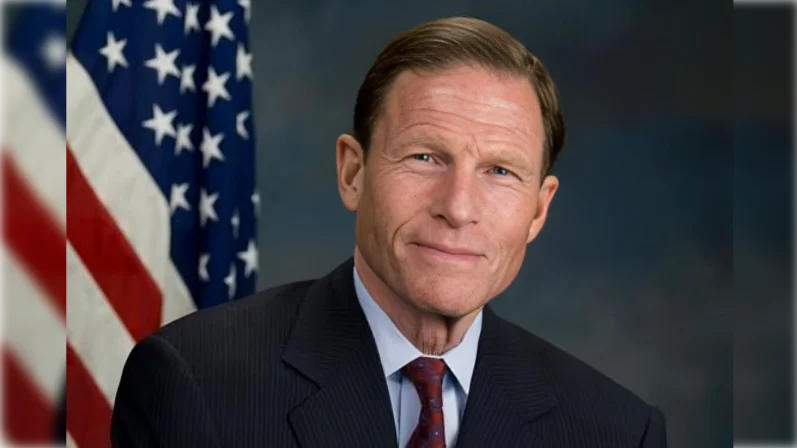
Senate Veterans’ Affairs Committee Ranking Member Richard Blumenthal criticized Senate Republicans on April 22 for supporting a budget resolution that would allocate $140 billion to Immigration and Customs Enforcement (ICE) and Border Protection without reforms, while blocking bipartisan efforts to expand benefits for combat-injured veterans.
The debate centers around the Major Richard Star Act, a bipartisan bill intended to correct what supporters call an injustice preventing many combat-injured veterans from receiving full military benefits. Currently, only those with disability ratings above 50 percent and more than 20 years of service are eligible for both Department of Defense retirement pay and Department of Veterans Affairs disability payments. More than 50,000 combat-injured military retirees remain ineligible under current law.
“Senate Republicans are willing to work overtime to deliver huge tax breaks to billionaires and siphon billions to ICE with no strings attached. When it comes to lowering costs for Americans, helping working families, or making good on our promises to veterans, Republicans say we can’t afford it,” said Blumenthal. “In fact, Senate Republican leadership has continuously refused to advance bipartisan legislation to deliver for combat-injured veterans…Why? They claim we cannot afford those benefits…The benefits that equate to one-fourteenth of the money Republicans want to send to ICE. The same Republicans who cannot find the time or the $13 billion to ensure our combat-injured veterans receive their full, earned benefits, they’ll keep us here all night spend $140 billion on ICE and CBP.”
Blumenthal also said: “It falls on deaf ears for Republicans to claim veterans’ initiatives, like the Major Richard Star Act, are too expensive while they push hundreds of billions into Trump’s rogue agency or a war of choice. It seems to me Republicans can always find more money for tax cuts…[for] billionaires, but not so much when we’re talking about working families or veterans…The cost of taking care of our veterans is a cost of war. It’s a cost that must always be paid.”
The Major Richard Star Act has broad support in Congress with 79 cosponsors in the Senate and 322 in the House from both parties. However, attempts by Blumenthal in October and March failed due to opposition from Senate Republican leadership who declined requests for floor votes.
During his remarks Blumenthal also referenced deportation proceedings initiated by ICE under the Trump Administration against former military members: “Over the past year, the Trump Administration has begun deportation proceedings for 34 former members of the military and 248 relatives of former military members. This number doesn’t include the countless other former military members that have been swept up into detention by roving patrols and lawless arrests. These are real individuals who chose to wear the uniform, they are not abstract entities…As Republicans propose sending another $140 billion to ICE and CBP, I ask them if they share the same disregard for our troops and veterans or if they will join me in saying enough is enough.”
The Senate Veterans' Affairs Committee oversees programs supporting U.S. veterans including health care access improvements according to its official website. The committee operates offices within the U.S. Capitol complex according its official website.
As part of its role within the United States Senate collaborating with agencies such as Veterans Affairs according its official website, it maintains jurisdiction over veteran programs nationwide as reported by its official site. Jerry Moran served as chairman with Blumenthal as ranking member during this period according its official website.