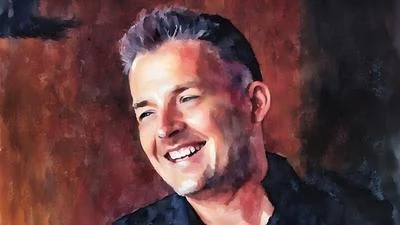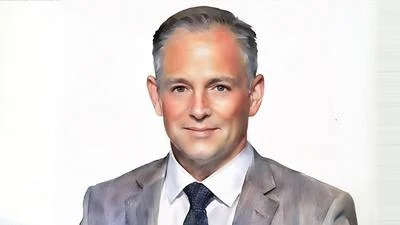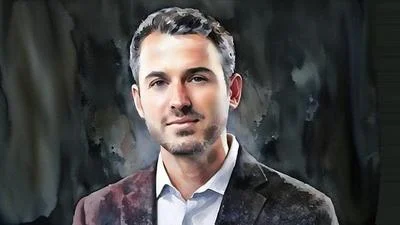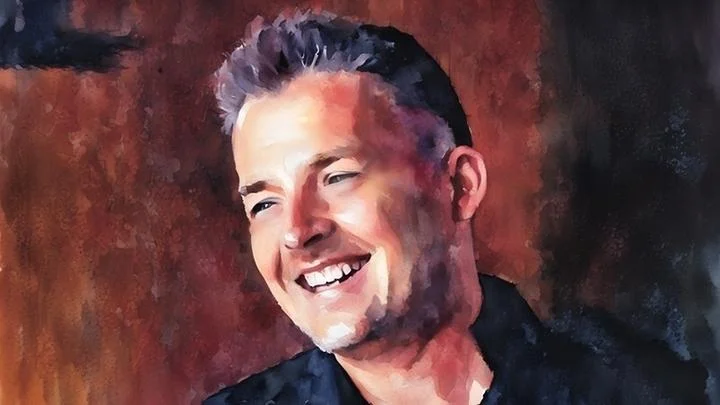
War in Ukraine continues to shape global security and humanitarian response, as lessons from the conflict spread beyond Europe. Andrew Moroz, founder of the Renewal Initiative, says Ukraine’s resilience offers a model for rebuilding and leadership even as the war continues.
Moroz was born in Kyiv when it was part of the Soviet Union and immigrated to the United States as a child. His parents remained connected to Ukraine and believed in its eventual rebuilding. His father regularly led mission teams to the country before his death. Moroz says that legacy shaped his own decision to return after Russia’s full-scale invasion in 2022, when he began traveling back and forth to deliver aid and support local partners.
Moroz says his work began with an “overwhelming desire to help share the stories of what was actually happening on the ground.” Early uncertainty drove him to act. “Nobody knew what was going to happen, whether Ukraine was actually going to make it … I said, ‘I think I have to be on the ground.’”
That decision carried risk. “I wrote the letters, I said goodbye to each of my kids,” he says. “It may have been the last time that I saw my kids.” He entered Ukraine in March 2022 with medical supplies, driving through checkpoints and into recently liberated areas. “It felt like driving onto a set of a World War II movie,” he says, describing destroyed tanks, burned buildings, and civilians navigating the aftermath.
Direct encounters shaped his understanding of the war’s human cost. He recalls a young boy asking for basic supplies. “He whispered to me, ‘They’re for my mom,’” Moroz says. “This very basic thing that I almost never think about … they were not able to have access to that. This 13-year-old boy shouldn’t live in a community where he was living in fear.”
Those experiences led to the creation of the Renewal Initiative, which focuses on delivering aid and strengthening local capacity. “Ukraine is moving from just emergency response mode to building mode, rebuilding mode,” he says. “Part of what we want to do is help equip those who are doing it.”
His organization has brought doctors, counselors, and chaplain trainers into the country, often near the front lines. “You’re right on the front line with the first medical professionals who are caring for wounded soldiers,” he says. Recent efforts have focused on training chaplains to meet widespread trauma. “There’s just not enough caregivers to meet all of the needs of traumatized kids, wounded soldiers, broken families.”
Moroz says resilience defines Ukraine’s response. “The ability to stay grounded, the ability to adapt, and the ability to keep moving forward, despite outward challenges,” he says. That mindset appears in everyday decisions, from rebuilding damaged structures to continuing community programs under constant threat. “People are taking something that’s broken and they’re figuring out a way to renew it and rebuild it.”
Local initiatives illustrate that shift. He describes a volunteer in Dnipro running a children’s program during frequent air raids. “He could be running or hiding … instead, he is leaning into serving others,” Moroz says.
Moroz says Ukraine’s experience is now influencing global security and humanitarian strategy. “They don’t just want handouts. They want partnership,” he says. Ukrainian leaders are sharing battlefield lessons and crisis management strategies with allies. “Their desire to share their learnings with the world … that’s their way of giving back.”
He points to a broader warning for Western audiences. “We’re experiencing something … and I’m afraid that you guys will experience this same type of pain,” he says, describing what he sees as an invitation to learn from Ukraine’s experience before similar crises emerge elsewhere. “Now is the time for us to pay attention.”
That message extends beyond military concerns. Moroz says societies must prepare emotionally and spiritually for disruption. “I forget what it’s like to feel like I’m in danger,” he says of returning home. “Things may not always be this quiet … this painless.”
Faith and meaning play a central role in his perspective. “Don’t be overcome with evil, but overcome evil with good,” he says, describing a guiding principle for his work. He argues that suffering can lead to broader impact. “Your pain will not be wasted … Ukraine’s pain now is helping in the Middle East … it’s helping our teams when we come back.”
Moroz frames the conflict as a test of shared humanity rather than distant geopolitics. “You don’t have to go to Ukraine in order to make an impact,” he says. “Have a curious, humble posture … take responsibility not for a war that’s not yours, but for common humanity.”